

To create a sales presentation, start by researching your audience and defining the sales objective. Then build a buyer-focused story around the prospect’s problem, your solution, measurable benefits, proof, and a clear next step. Finally, simplify the slides, add relevant visuals, rehearse the delivery, and prepare for objections.
What is a Sales Presentation?
A sales presentation is a carefully organized pitch designed to influence prospective customers or investors. It can be made for selling some goods, offering a service, or proposing a deal. It follows a purposeful flow that blends narrative, facts, images, and persuasion.
It’s critical to know how to create a great sales presentation for every salesperson and marketer to achieve the desired outcomes. Even the strongest sales presentation only works once the right prospects are in the room, which is why B2B SEO often plays an important role before the sales call even begins. The following guidelines apply whether you are creating a persuasive sales proposal, strategy presentation, or sales pitch deck:
- Highlight the problem
- Present a clear, tailored solution
- Back it up with data and proof
- Close with a strong call-to-action
How to Create a Sales Presentation That Closes the Deals
Creating a sales presentation involves more than designing slides. It’s about strategy, research, and communication. Let’s break it down into 11 key steps:
-
Define Your Sales Goal
Decide what you want the prospect to do after the presentation, such as book a demo, request a proposal, start a trial, or make a purchase.
-
Know Your Audience
Understand who you’re presenting to, their goals, pain points, priorities, and likely objections.
-
Identify the Problem
Clearly explain the problem your prospect is facing and why it needs to be addressed.
-
Show the Business Impact
Use relevant data or examples to show how the problem affects costs, revenue, productivity, risk, or growth.
-
Present Your Solution
Explain how your product or service solves the prospect’s problem. Focus on the solution rather than listing every feature.
-
Highlight the Benefits
Connect your key features to specific benefits and business outcomes the buyer can expect.
-
Build Credibility With Proof
Use case studies, customer results, testimonials, data, or other evidence to support your claims.
-
Address Buyer Objections
Anticipate common concerns about price, implementation, ROI, competitors, or switching and address them clearly.
-
End With a Clear Next Step
Tell the prospect exactly what to do next, whether that’s booking a demo, starting a trial, requesting a proposal, or scheduling a follow-up.
What Slides Should a Sales Presentation Include?
A strong sales presentation should guide the prospect through a logical buying story rather than simply introduce your company and list product features. A typical sales deck can include these 8–10 sections:
| Slide | Purpose |
|---|---|
| 1. Opening | Capture attention and establish relevance |
| 2. Customer problem | Show that you understand the buyer’s challenge |
| 3. Impact | Explain the cost, risk, or missed opportunity |
| 4. Solution | Introduce your product or service |
| 5. How it works | Explain the solution without unnecessary detail |
| 6. Benefits | Connect capabilities to business outcomes |
| 7. Proof | Use case studies, testimonials, results, or data |
| 8. Differentiation | Explain why your solution is the better fit |
| 9. Investment | Present pricing or commercial considerations when appropriate |
| 10. Next steps | Tell the prospect exactly what should happen next |
Sales Presentation Example: A 10-Slide Structure
| Slide | Example |
|---|---|
| 1 | Reduce Manual Reporting Time by 50% |
| 2 | Your Team Spends Hours Creating Reports |
| 3 | Manual Reporting Slows Decisions |
| 4 | An Automated Reporting Solution |
| 5 | How the Solution Works |
| 6 | Benefits for Your Team |
| 7 | Customer Results |
| 8 | Why Choose Us |
| 9 | Expected ROI |
| 10 | Book a Demo |
How to Create a Sales Presentation in Google Using SlidesAI
It can take hours to create a sales deck by hand. You can make one in a matter of minutes with SlidesAI. Here’s how:
Step 1: Install the SlidesAI Extension
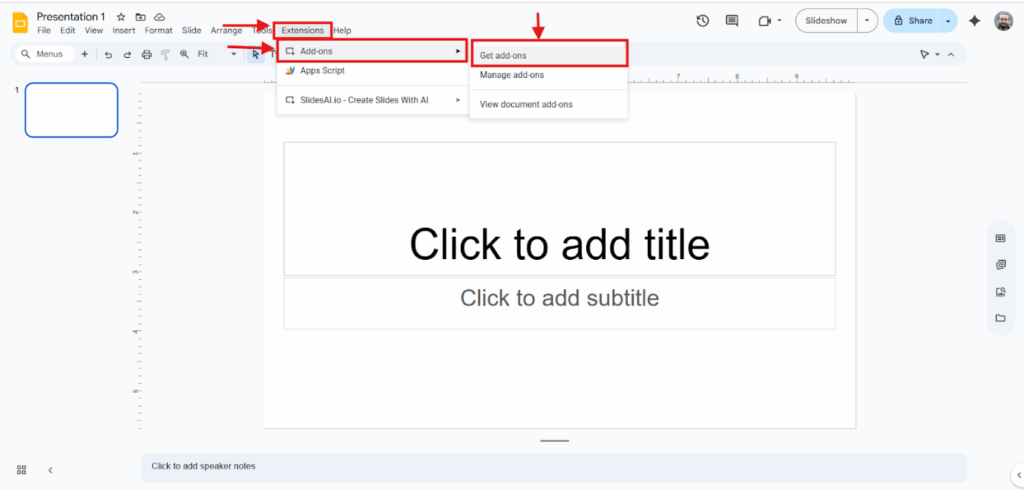
Open Google Slides → go to Extensions → Add-ons → Get add-ons. Search for SlidesAI and install it. This adds the AI tool directly into your workspace.
Step 2: Open SlidesAI
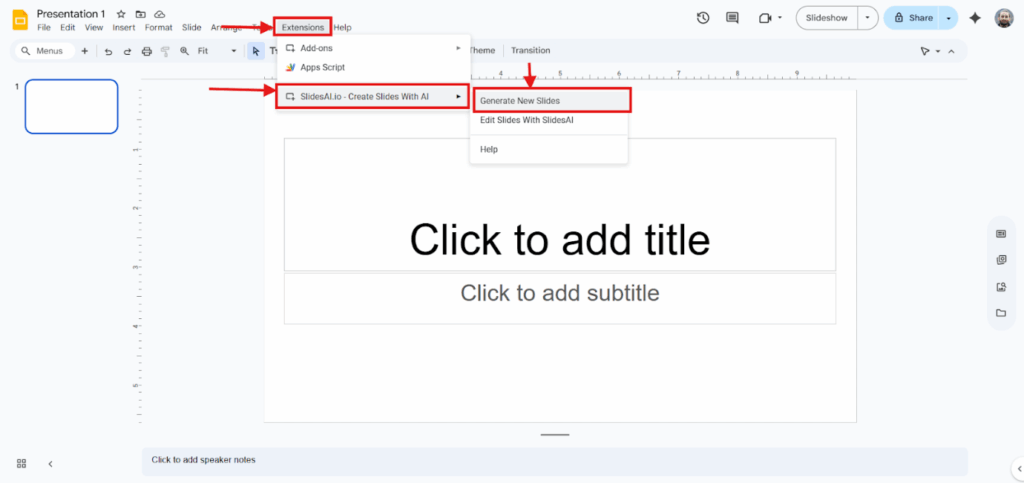
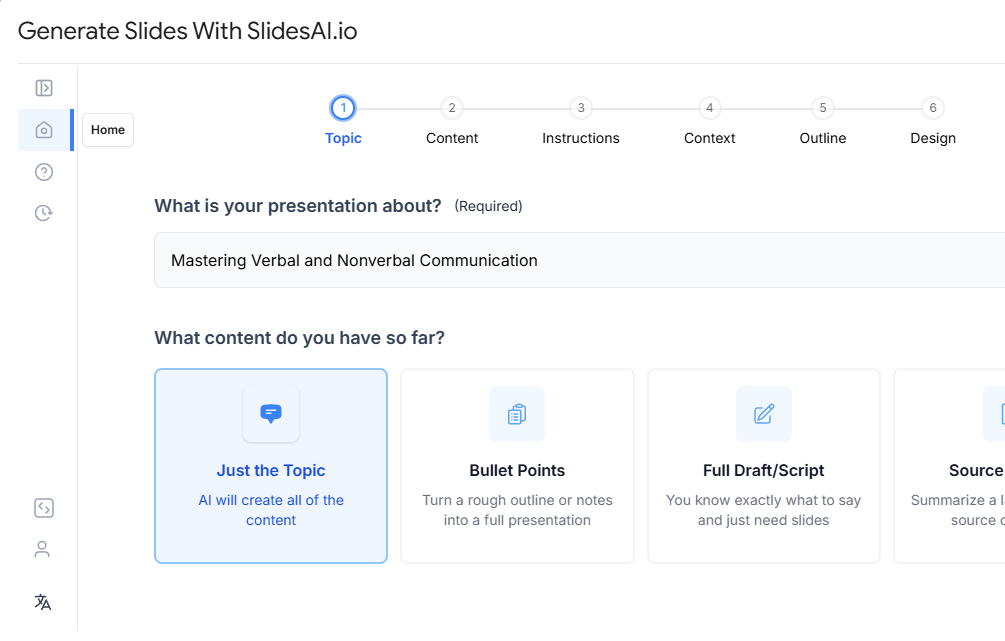
Click on Extensions → SlidesAI → Generate new Slides. This step opens the SlidesAI dashboard.
Step 3: Add Your Topic
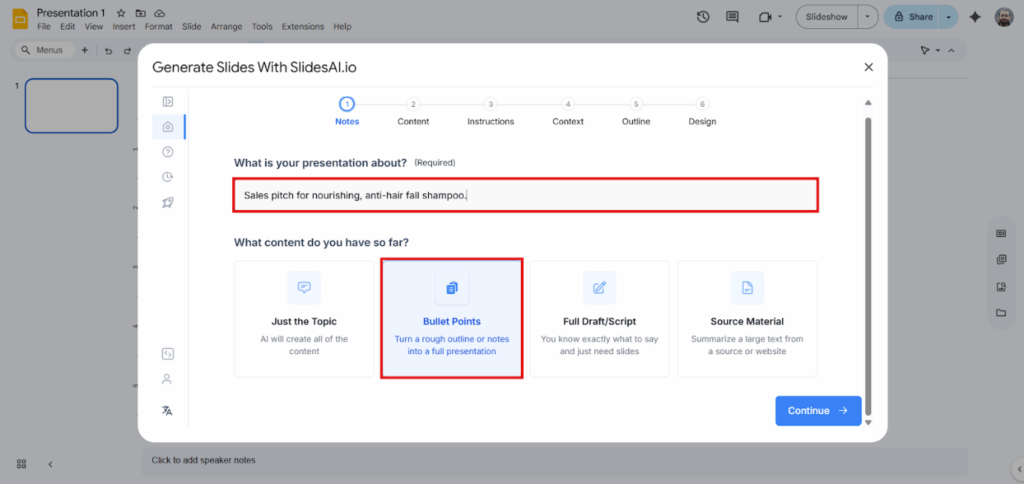
Enter what your presentation is about. Be specific, for example, “Sales pitch for B2B SaaS startup targeting SMBs” instead of just “sales presentation.”
Step 4: Insert Your Content
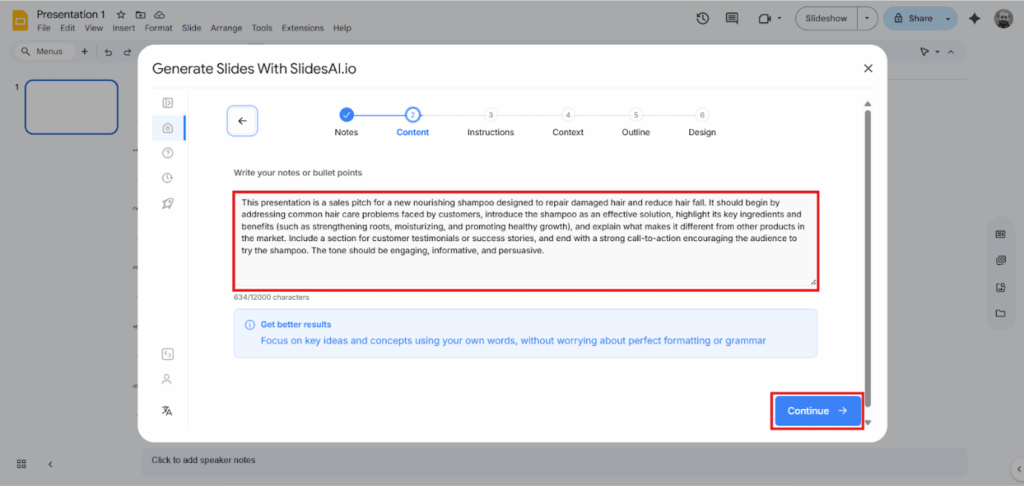
Paste any text, bullet points, or notes you want included. The more context you provide, the more accurate your deck can be.
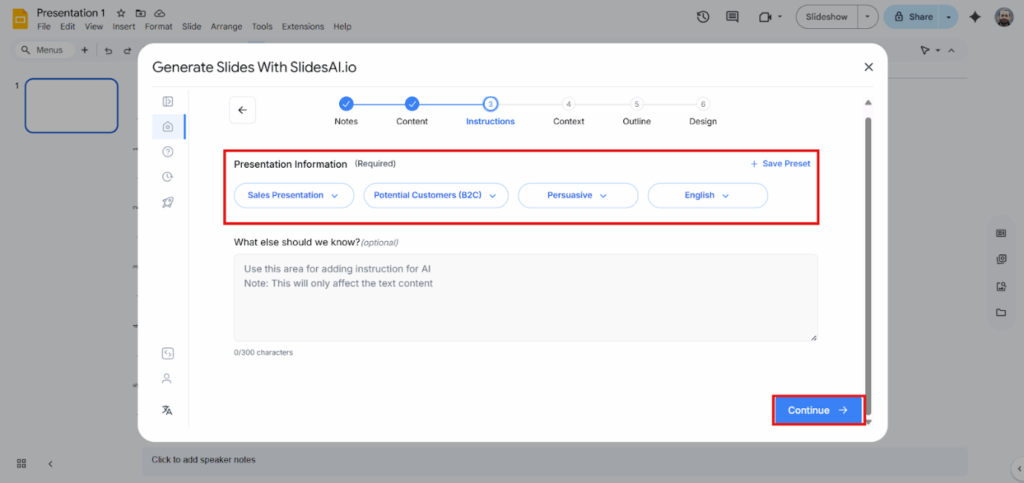
Step 5: Customize Preferences
Adjust tone (formal, persuasive, casual) and slide length. Learn different types of presentations to ensure your deck matches your prospect’s expectations.
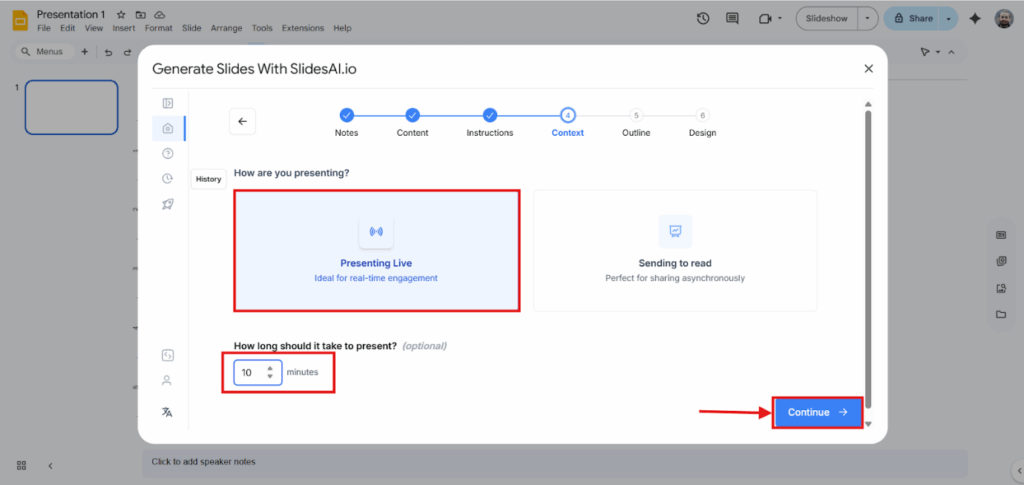
Step 6: Set Presentation Duration
Enter how long you plan to present (e.g., 15 minutes). SlidesAI can shape the outline accordingly.
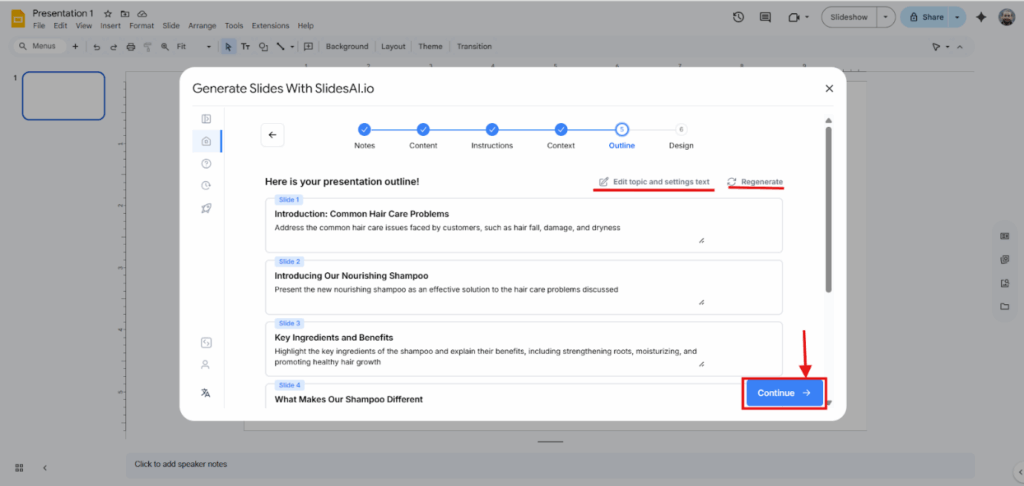
Step 7: Review and Edit Outline
SlidesAI generates an outline for your slides. Review it, make edits, or regenerate if needed.
Step 8: Pick a Design
Choose from professional slide templates to match your brand style.
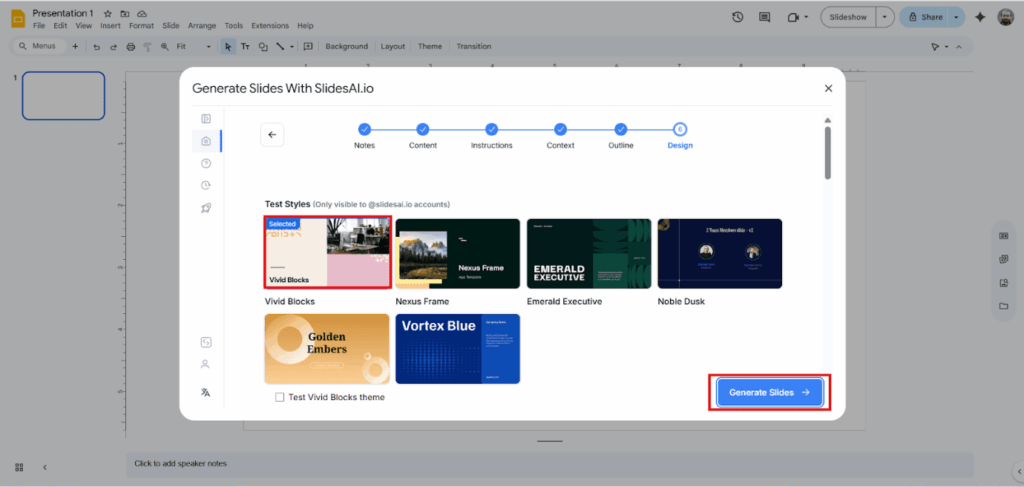
Step 9: Generate Slides
Click “Generate Slides” and let SlidesAI build your full deck. You can then edit, rearrange, or add new slides as needed.
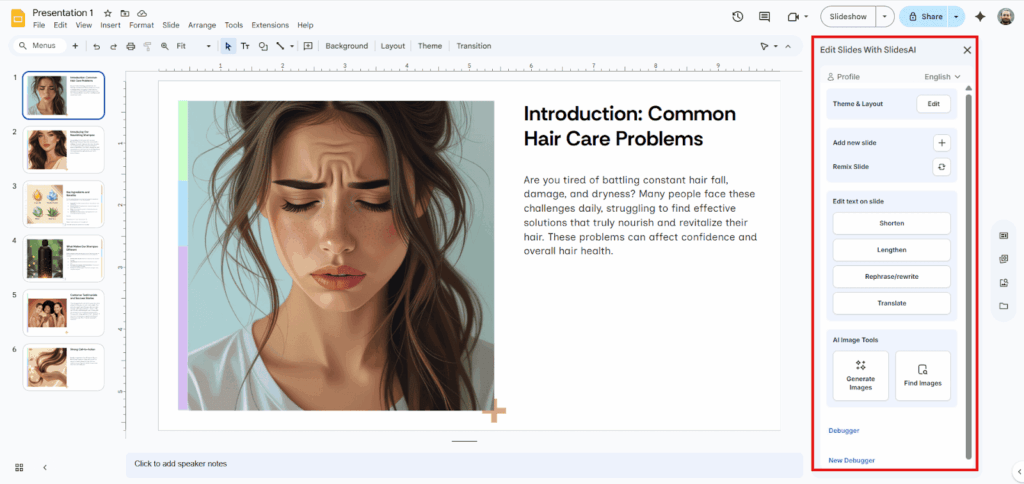
Create AI presentations directly in Google Slides.
- No design skills required
- 3 presentations/month free
- Save directly in Google Slides
How to Create a Good Sales Presentation in PowerPoint Using SlidesAI?
Prefer PowerPoint? SlidesAI’s AI PowerPoint generator works there, too. Here are the detailed scores:
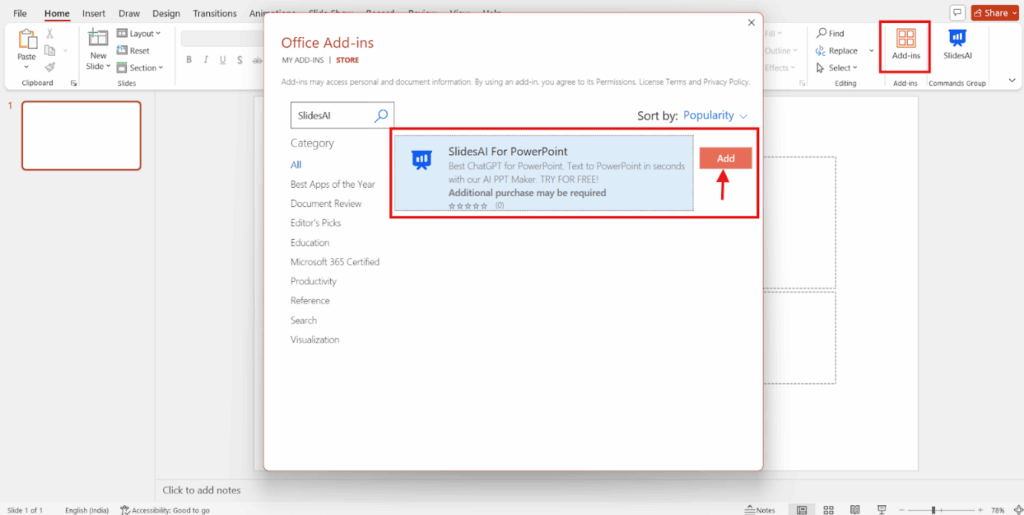
Step 1: Add SlidesAI Add-in
Open PowerPoint → click on Home → Add-ins → search for SlidesAI → click Add.
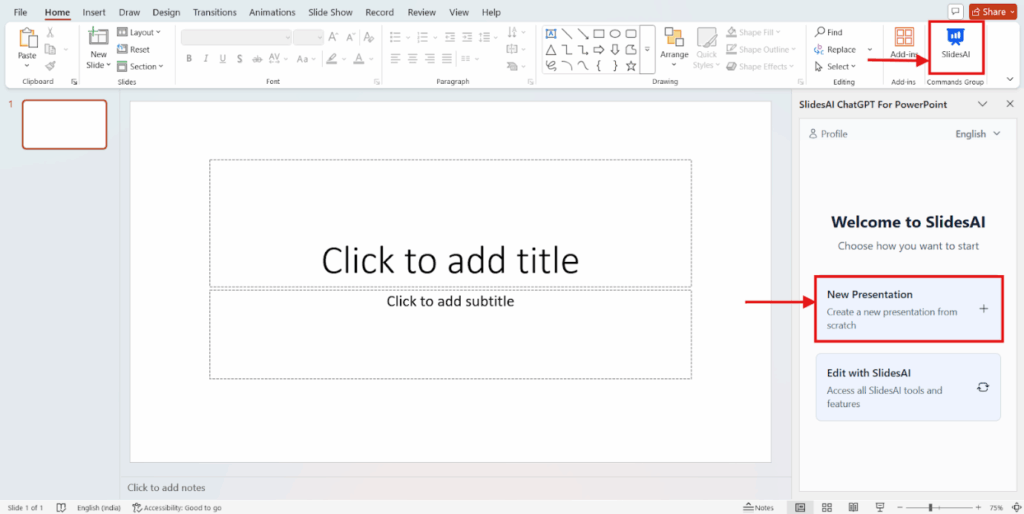
Step 2: Open SlidesAI
Go to the SlidesAI add-in and select “New Presentation.”
Step 3: Add Your Topic
Enter your presentation subject in detail, just like with Google Slides.
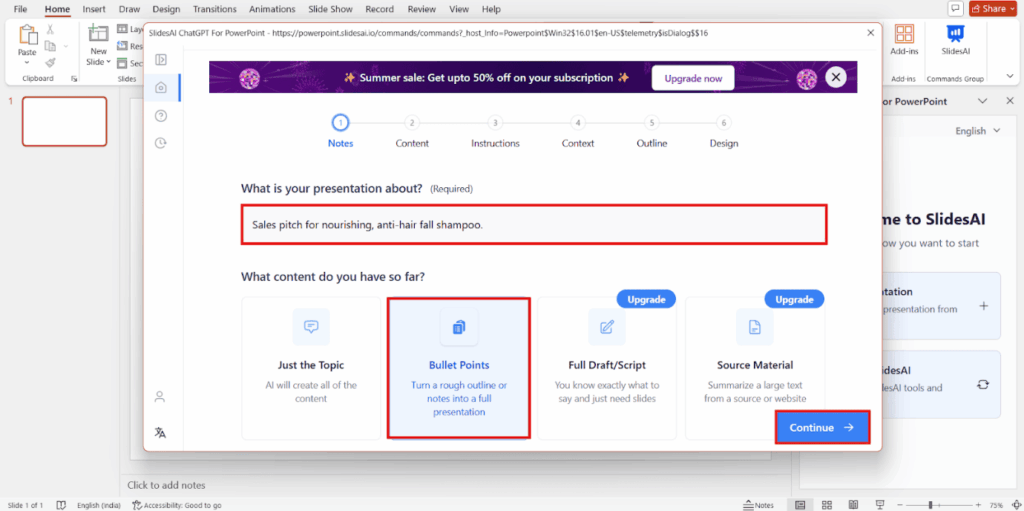
Step 4: Insert Content
Paste any notes, bullet points, or structured text.
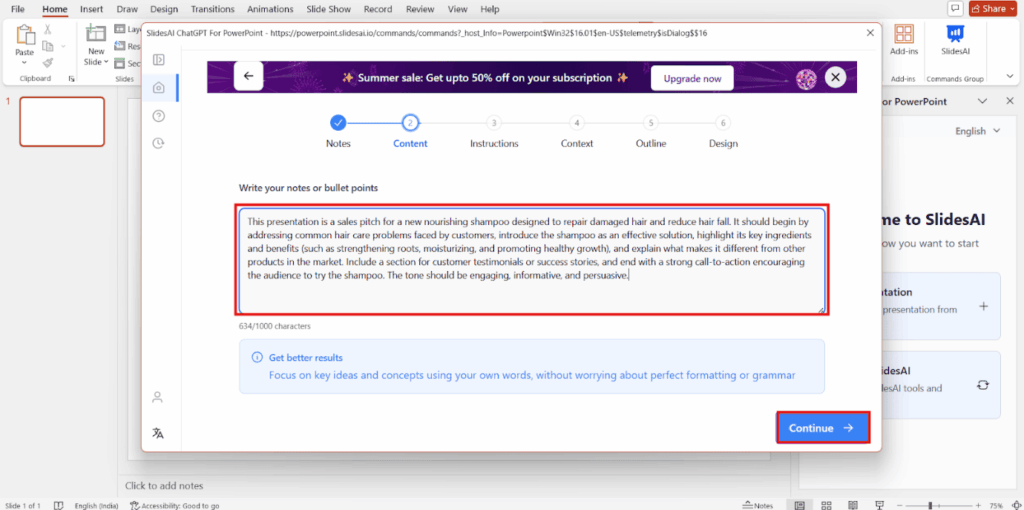
Step 5: Set Preferences
Choose tone, length, and audience style.
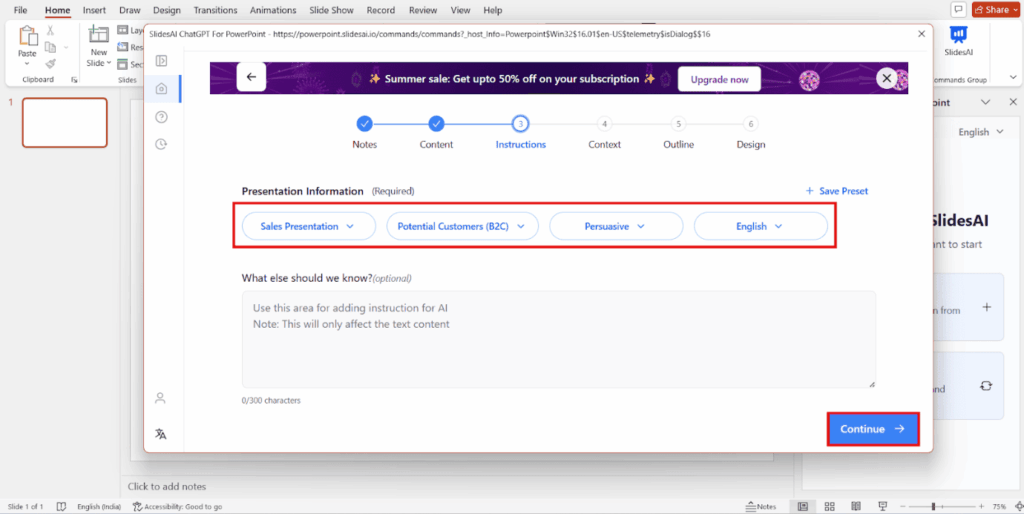
Step 6: Add Presentation Duration
Mention how long the pitch should last so the outline matches your timing.
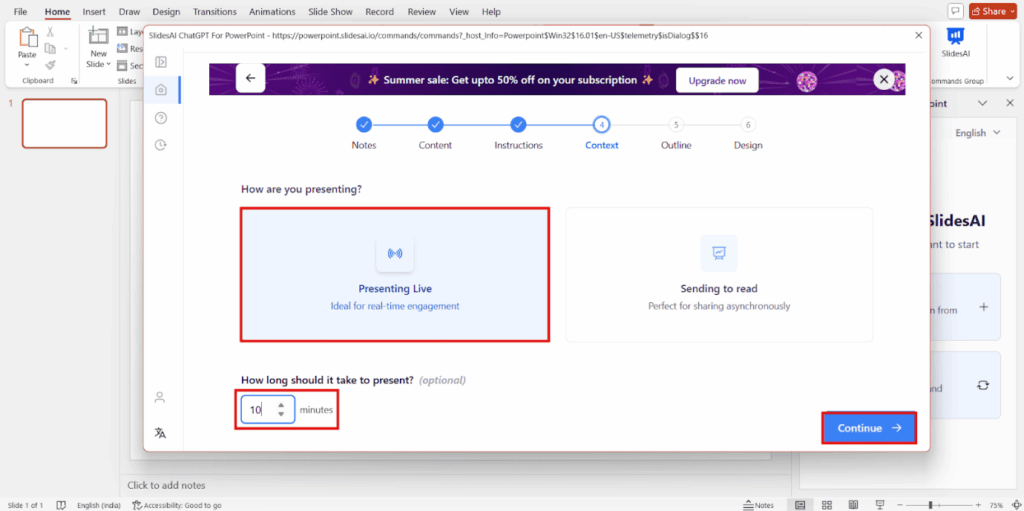
Step 7: Review Outline
SlidesAI creates a draft outline. Review and tweak as needed.
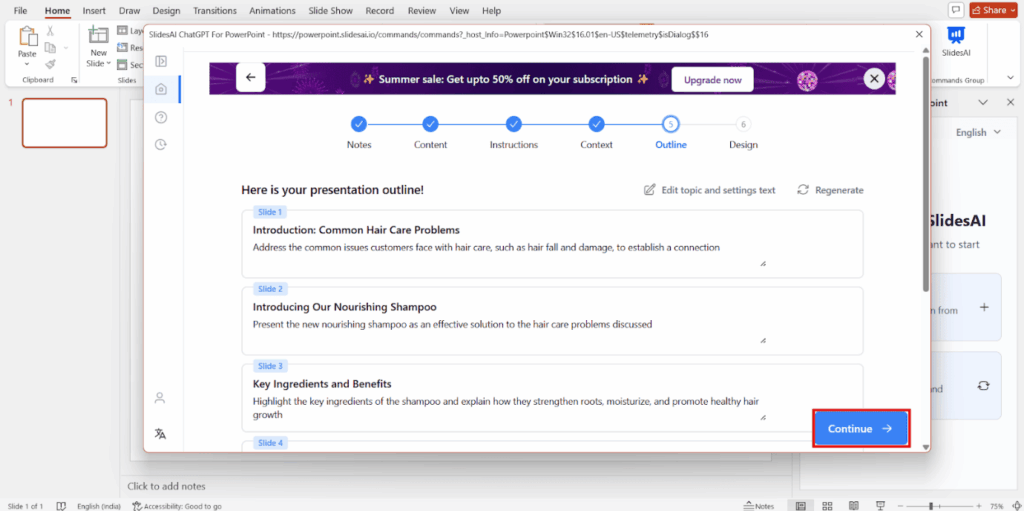
Step 8: Select Design
Pick a theme that fits your audience and brand.
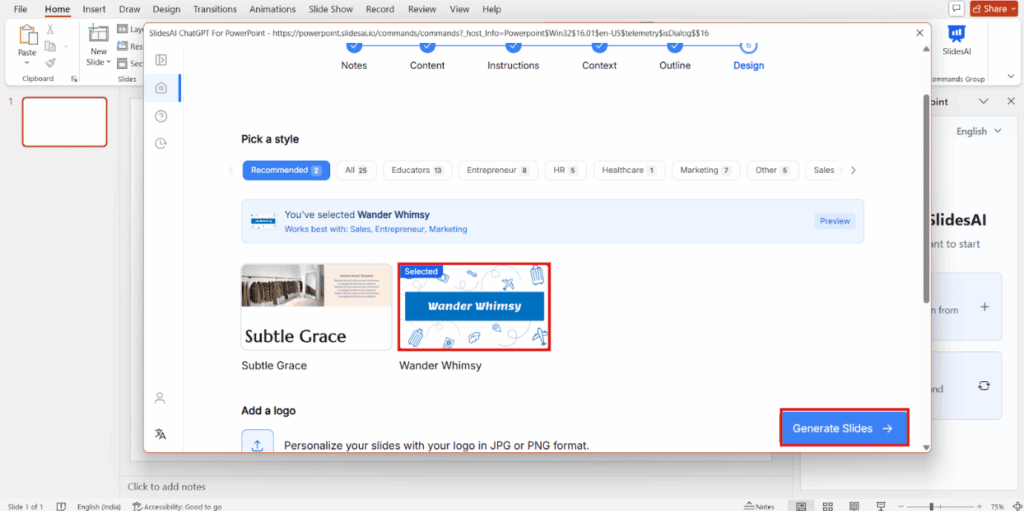
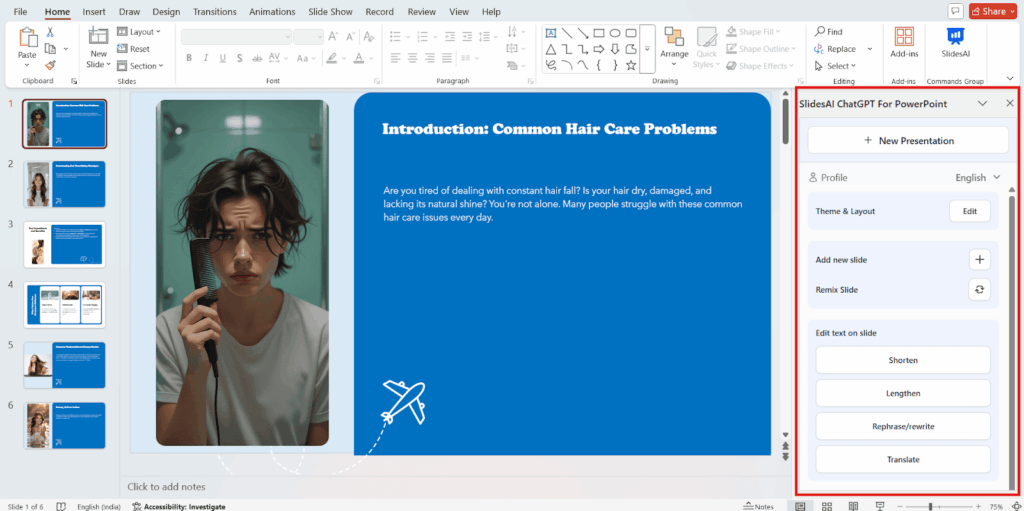
Step 9: Generate Slides
Click “Generate” to instantly create your sales presentation.
Learn more about sales documents here: Pitch deck vs business plan.
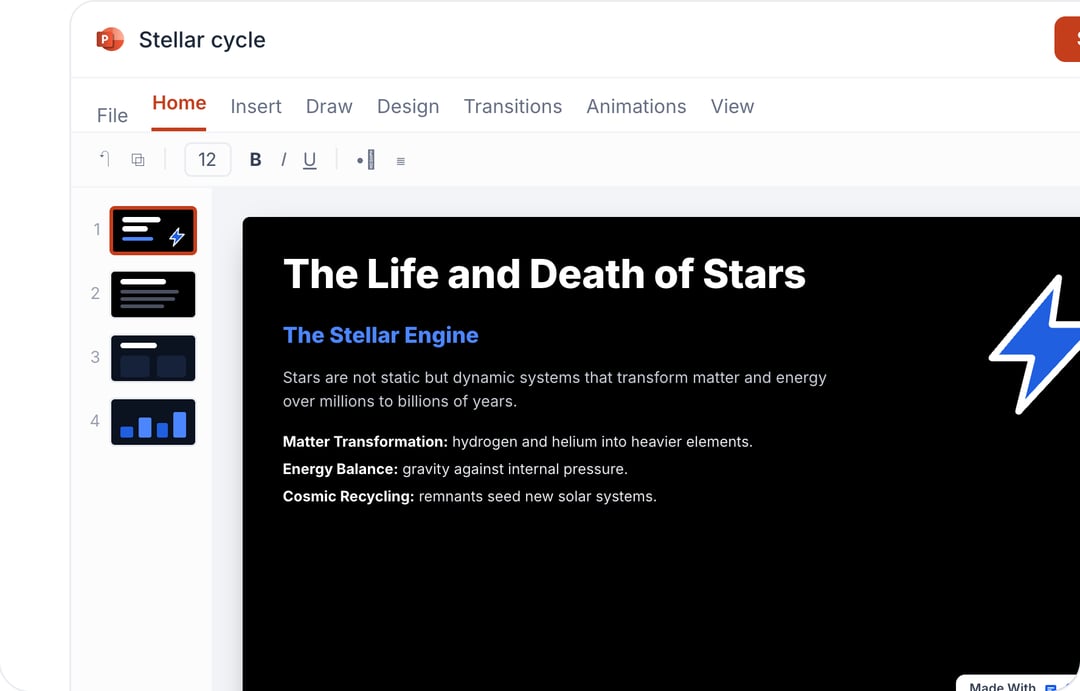
Take Your PowerPoint From Basic to Professional With SlidesAI
- Improve your slide content with AI
- Create polished layouts faster
- Work directly inside PowerPoint

Common Mistakes to Avoid in Sales Presentations
Errors can impair a good pitch, even for seasoned salespeople. The most important ones to look out for are as follows:
- Providing Information Overload: Prospects are overwhelmed by too much data. Instead, concentrate on the main points and maintain your slides neatly.
- Emphasizing Features Over Benefits: Prospects are interested in results, not simply features. Convert characteristics into “what’s in it for them.”
- Ignoring the Problem Statement: The pitch becomes less relatable if it jumps directly to solutions. Always start by identifying the pain point.
- Using Technical Terms or Jargon Excessively: Non-technical listeners are turned off by complex terminology. Use plain wording.
- Applying Generic Decks: A generic deck can make the slides seem disjointed and less personalized. Adapt the material to the business and sector.
- Forgetting the Call-to-Action: Prospects won’t know what to do if there isn’t a clear next step. End with a call to action.
- Ignoring the Need to Follow-Up: Many transactions end in silence. Send a summary and next-step email at all times.
Creating a connection with your audience and earning their trust is critical. To achieve their confidence, you need to demonstrate how your solution addresses their particular issues. The good news is that you no longer need to remember all the important aspects of a sales presentation.
In today’s digital world, you can produce engaging presentations more quickly and effectively with the help of a few clicks by using tools like SlidesAI. And, this is all achievable while perfectly adhering to a disciplined process and avoiding typical blunders.
FAQs About Sales Presentation
How can I make a more interesting sales presentation?
Make it participatory. Ask open-ended questions, use storytelling, and bolster your arguments with brief demonstrations or images. Engage your audience by asking for their thoughts or examples rather than speaking with them.
What should I do when the presentation is over?
Always end with a brief overview of the main advantages and a thank you. Clearly state the next steps, such as setting up a trial, sending prices, or setting up a demo. To maintain momentum, send a follow-up email later with slides, notes, and steps to take.
How do you create a good sales presentation?
Start with the buyer’s problem, explain its business impact, present your solution, show proof of value, address objections, and end with a clear next step.
What should a sales presentation include?
A sales presentation should include the buyer’s problem, its impact, your solution, key benefits, proof or results, differentiation, pricing when relevant, and a clear call to action.
How many slides should a sales presentation have?
There is no fixed number. Use enough slides to explain the problem, solution, value, and next steps without overcrowding the presentation. For a short sales pitch, 5–10 focused slides may be enough.
How long should a sales presentation be?
Keep it as long as necessary to support the buying decision, but avoid unnecessary detail. A short sales pitch may take 10–15 minutes, while a detailed sales presentation can take longer.
How do you start a sales presentation?
Start by establishing relevance. Introduce the buyer’s problem, a key insight, or a relevant question that shows you understand their situation.
How do you end a sales presentation?
Summarize the key value, address any remaining concerns, and give the prospect one clear next step, such as booking a demo, starting a trial, or scheduling a follow-up.
Can AI create a sales presentation?
Yes. AI presentation tools can turn a topic, notes, or source material into a structured sales presentation. You should still review the content, add buyer-specific information and proof, and refine the final slides.