
Creating a science fair presentation can take longer than the experiment itself. Between organizing results, designing slides, and figuring out what to include, the process often feels overwhelming. The good news is that AI tools can cut that workload down significantly.
In this blog, we are taking a look at how to create a science fair presentation quickly, what sections matter most, and how you can build a polished presentation in under 10 minutes using SlidesAI. Let’s jump right into it.
What Is a Science Fair Presentation?
A science fair presentation is a structured way of explaining your project to others. It shows what you studied, how you tested your idea, and what you discovered in the end. Instead of just submitting a written report, you present your work through slides, visuals, and explanations so judges and viewers can quickly understand your thought process.
What to Include in a Science Fair Presentation?
Here’s what you should include in a science fair presentation:
1. Introduction
The introduction gives a quick overview of your project. This is where you explain what your science fair topic is about and why you chose it.
You can include:
- The title of your project
- A short explanation of the topic
- Why the experiment matters
- What question you wanted to answer
Keep this section simple. You are only setting the stage for the rest of the presentation.
2. Hypothesis
The hypothesis is your prediction before starting the experiment. It explains what you believed would happen and why.
For example, if your experiment tests plant growth under different lighting conditions, your hypothesis might explain which light source you think will produce the fastest growth.
A strong hypothesis usually connects to logic or previous knowledge rather than guessing.
3. Materials and Method
This section explains how you performed the experiment. It should show your process step by step.
Include:
- Materials used
- Tools or equipment involved
- Procedure followed
- Variables you controlled or changed
Think of this as instructions someone else could follow to repeat your experiment. The clearer you explain the process, the easier it becomes for judges to understand your work.
4. Results
This section presents what actually happened during the experiment.
You can include:
- Data tables
- Graphs or charts
- Photos of the experiment
- Measured outcomes
Results should focus on facts rather than opinions. You are showing what your experiment produced, not what you think about it yet.
5. Discussion
The discussion explains what your results mean.
This is where you connect your findings back to the hypothesis. Ask questions like:
- Did the experiment support your prediction?
- Were there any unexpected outcomes?
- What factors may have influenced the results?
This section helps show your understanding of the experiment rather than just presenting numbers.
6. Conclusion
The conclusion wraps everything together.
You should briefly explain:
- What you learned
- Whether your hypothesis was correct
- Why the experiment matters
- What you would improve next time
A conclusion does not need to be long. It should leave the audience with a clear understanding of your final takeaway.
Also Check : Best Science Topics for Students and Professionals
How to Create a Science Fair Presentation Using SlidesAI in Under 10 Minutes
Here’s how you can create a science fair presentation using SlidesAI in under 10 minutes.
Step 1: Open SlidesAI
If you are using the web app, simply sign in to your SlidesAI account and start creating your presentation.
If you are using Google Slides, install SlidesAI through the Google Workspace Marketplace. Once installed, you can access it directly inside your presentation workspace.
If you are using PowerPoint, install the SlidesAI add-in and launch it from within PowerPoint.
You do not need to create a separate account manually when using the Google Slides add-on or PowerPoint add-in. Setup happens automatically when you launch SlidesAI from inside your presentation tool.
Step 2: Launch SlidesAI

Inside Google Slides, go to:
Extensions → SlidesAI.io – Create Slides with AI → Generate New Slides
This opens the SlidesAI panel where you can start building your presentation.
Step 3: Enter Your Science Fair Content

Now you can add your project information.
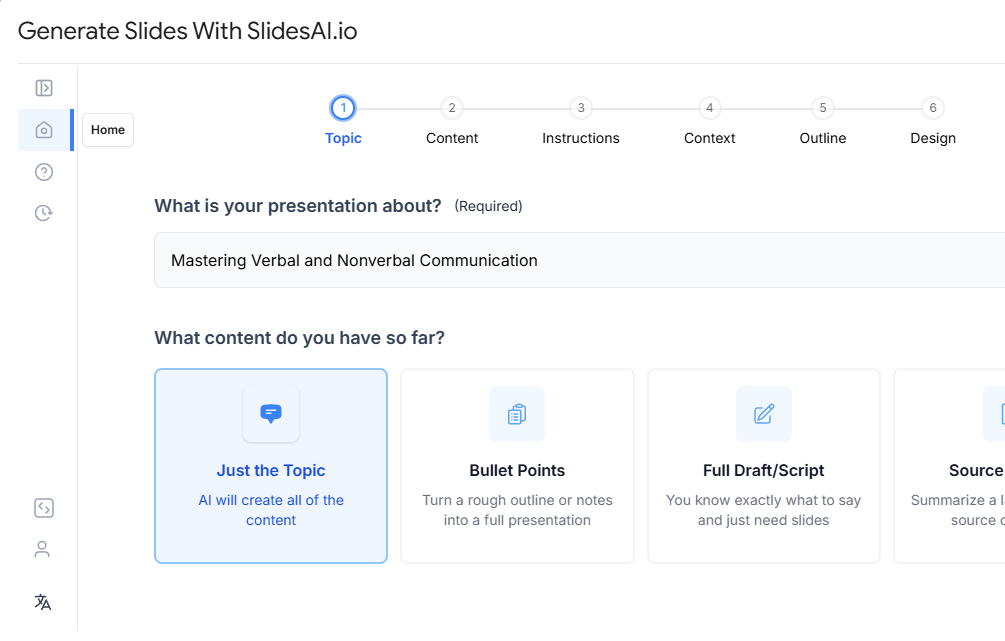
You can either type your topic or paste notes from your experiment. SlidesAI gives you different ways to enter content depending on how prepared you are.
You can choose from:
- Just the Topic if you only have an idea and want AI to build the content
- Rough Notes if you already have bullet points or scattered research
- Full Draft if your report is complete and only needs formatting into slides
This flexibility makes it useful whether you are starting early or finishing at the last minute.
Step 4: Configure Your Presentation Settings

SlidesAI lets you customize how your presentation should look and read.
Inside the settings section, you can give additional instructions to the AI. For example:
- Add examples to each slide
- Include a summary slide
- Keep the language simple
- Make slides suitable for judges
You can also select how the presentation will be used.

- Presenting Live creates shorter, cleaner slides with less text
- Sending to Read creates more detailed slides with extra explanations
For presentation length, choosing Auto works well because the AI decides the number of slides based on your content.
Step 5: Pick a Theme

The design matters more than many students realize. Judges often prefer presentations that look clean and easy to read.
For science fair presentations, simple themes work best.
Good choices usually include:
- White backgrounds
- Light blue or green accents
- Minimal distractions
- Clear headings
Avoid overcrowded designs or flashy visuals that pull attention away from the project itself.
Step 6: Generate and Review
Click Generate and let SlidesAI build your presentation.
Within moments, your slides will appear inside your existing presentation file.
Before moving forward, quickly check whether the structure makes sense.
Your flow should generally follow this order:
Introduction → Hypothesis → Materials → Results → Discussion → Conclusion
This step helps ensure your project tells a complete story.
Step 7: Add Your Data and Photos
AI can structure the presentation, but your experiment still needs personal details.
Add:
- Photos from your experiment
- Graphs showing results
- Data tables
- Images of materials used
Visual proof makes your science fair project feel more credible and easier to understand.
If you are adding graphs, keep them simple. Label axes clearly and avoid too many colors that may make the data confusing.
Step 8: Final Check and Export
Before presenting, do a quick review.
Look for:
- Spelling mistakes
- Missing labels
- Inconsistent font sizes
- Hard-to-read text
Once everything looks polished, export the presentation.
You can save it as:
- PPTX for PowerPoint or Google Slides
- PDF for printing or sharing
This gives you a ready-to-present file without spending hours formatting slides manually.
Create AI presentations directly in Google Slides.
- No design skills required
- 3 presentations/month free
- Save directly in Google Slides
Tips for a Successful Science Fair Presentation
Even a strong project can feel weak if the presentation lacks clarity. A few simple adjustments can make your delivery much stronger.
1. Use Visual Aids
Visuals help explain information faster than paragraphs of text.
Charts, experiment photos, and diagrams make your presentation easier to follow. They also help judges understand your process quickly.
2. Practice Your Presentation
Knowing your slides is important. Practice explaining your project aloud before presentation day.
You do not need to memorize every word. Focus on understanding your project well enough to explain it naturally.
3. Speak Clearly and Loudly
A good presentation depends on communication.
Speak slowly enough for people to follow along. Avoid rushing through slides. Make eye contact when possible.
4. Stay Energetic and Enthusiastic
Confidence matters.
Even if you are nervous, showing interest in your project makes your presentation stronger. People respond better when you sound genuinely involved in what you created.
Read More : Common Presentation Mistakes to Avoid
Closing Thoughts
A science fair presentation does not need to take hours to build. Once your experiment is complete, the right AI tool can help organize your ideas into a clean, structured presentation quickly.
Using SlidesAI helps simplify the process by turning notes, drafts, or even a simple topic into presentation-ready slides. Instead of spending time adjusting layouts or formatting text, you can focus on presenting your findings with confidence.
If you want to create a science fair presentation without getting stuck in design work, AI can make the process faster, cleaner, and far less stressful.