
Key Takeaways
- A well-structured thesis defense presentation helps you explain your research clearly and confidently.
- Your presentation slides should support your explanation, not replace it.
- Practicing delivery is just as important as designing slides.
- The thesis defense presentation template by SlidesAI can save you time and improve clarity.
Explaining your months’ worth of research in one short thesis defense presentation can feel overwhelming. Many students struggle with deciding what to include, how to organize slides, and how to present their work clearly. Learning how to make a thesis defense presentation helps you communicate your research with confidence and clarity.
What Is a Thesis Defense Presentation?
A thesis defense presentation is a structured oral presentation where you explain your research topic, methods, findings, and conclusions to a review committee. The goal is to demonstrate your understanding of the subject and justify your research choices, along with proving your mastery of the concept.
While this is still a presentation, unlike the regular ones, a thesis defense presentation focuses on clarity, reasoning, and academic rigor rather than visual flair.
Thesis Defense vs Dissertation Defense
Although the formats may look similar, thesis and dissertation defenses differ in scope and expectations.
| Aspect | Thesis Defense | Dissertation Defense |
|---|---|---|
| Degree Level | Commonly required for master’s programs and, in some cases, honors bachelor’s degrees. | Required for doctoral programs such as PhD or EdD. |
| Purpose | Demonstrates understanding and application of existing research on a focused topic. | Demonstrates original research, independent thinking, and contribution to the field. |
| Level of Research Originality | Primarily synthesizes existing literature with limited or moderate data analysis. | Involves extensive original research, new data, methods, or theoretical contributions. |
| Length/Duration | Generally shorter, often completed within 1-2 hours. | Usually longer, often lasting 2-3 hours or more. |
| Committee Size | Smaller review panel, often 2-4 members from the same institution. | Larger panel, often 4-6 or more members, sometimes including external examiners. |
| Formality & Challenge | Comparatively less formal, with questions focused on clarity and understanding. | Highly formal, with detailed questioning on methods, limitations, and implications. |
| Presentation Focus | Background research, methodology overview, and key findings. | Research design justification, in-depth analysis, and impact on the field. |
| Outcomes | Pass or pass with minor revisions is common. | May result in major revisions or additional review before final approval. |
| Regional Variation | In the US, refers to master’s work; in Europe, it may refer to doctoral research. | In the US, refers to PhD work; in Europe, often refers to master’s research. |
What to Include in a Thesis Defense Presentation?
Maintaining a clear structure in your thesis presentation ensures your audience can follow your research story without confusion. Here’s what to include:
- Opening Context & Introduction: This section introduces your topic and provides the necessary background. It helps the audience understand the research area and its relevance.
- Research Purpose & Objectives: Clearly explain what your research aimed to achieve. This sets expectations for what the audience should look for in your findings.
- Background & Prior Research: Summarize key studies and theories related to your topic. Focus on the gaps your research addresses rather than listing everything.
- Methodology Overview: Explain what methods you used during your research and justify why they were appropriate. Keep explanations clear without unnecessary technical detail.
- Data Collection & Analysis: Describe how the data was collected and analyzed. This builds credibility and shows methodological rigor.
- Key Findings & Discussion: Highlight the most important results and explain what they mean. Connect findings back to your research questions.
- Conclusion & Future Directions: Lastly, your thesis defense presentation should summarize your main insights and suggest areas for future research. This shows your critical thinking skills that go beyond your studies.
How to Create a Thesis Defense Presentation?
Creating a thesis defense presentation can quickly go haywire if not done in a structured manner. Here’s how to make the process more manageable:
Step 1: Define Your Core Message
Identify the main contribution of your research. This message should guide all slide content.
Step 2: Start with a Strong Opening
Introduce your topic clearly and explain why it matters. A clear start helps you build confidence.
Related Read – How to Start a Presentation: 14 Effective Ways to Follow
Step 3: Present the Central Idea Clearly
Ensure each section supports your research objective. Avoid unnecessary digressions.
Step 4: Organize Slides Logically
Follow a clear outline for your presentation. Ideally, it should move from background to results, so that the slides sound more logical.
Related Read – How to Structure a Presentation?
Step 5: Include Your Objectives and Methodology
Clearly mention your research objectives, study design, data collection process, and analysis method. This helps the committee understand how you reached your findings.
Step 6: Include One Idea Per Slide
Each slide should address one idea. This improves clarity and readability.
Step 7: Use Multimedia Thoughtfully
Visuals can support understanding, but only when used purposefully. You can add bar graphs or charts in your presentation to make your data more comprehensible.
Related Read – How to Create Visuals for Presentations?
Step 8: Emphasize Key Takeaways
Highlight the results you want the committee to remember. This helps in emphasizing your conclusions better.
Step 9: End with a Strong Closing
Make sure the last slide of your presentation summarizes your findings and concludes everything in a comprehensible manner.
Related Read – How Do You a Summary Slide on Google Slides?
Step 10: Prepare for the Q&A Session
Anticipate possible questions about your research problem, methods, limitations, and results. Preparing answers in advance will help you respond confidently during the defense.
Your structure is ready — now build your thesis defense PowerPoint with AI in just a few clicks.
How to Create a Thesis Defense Presentation Using SlidesAI?
Creating a strong thesis defense presentation becomes much easier when you have a clear structure and the right design support. With SlidesAI, you can quickly turn your research content into well-organized slides, saving time while keeping your presentation professional and easy to follow.
Step 1: Open SlidesAI
Start by visiting SlidesAI in your browser. This is where you can explore ready-made presentation templates designed for different use cases, including thesis defense presentations.

Step 2: Go to the Templates Section
Once you’re on the SlidesAI homepage, click on Templates from the menu. Then select All presentation templates to view the complete template library.
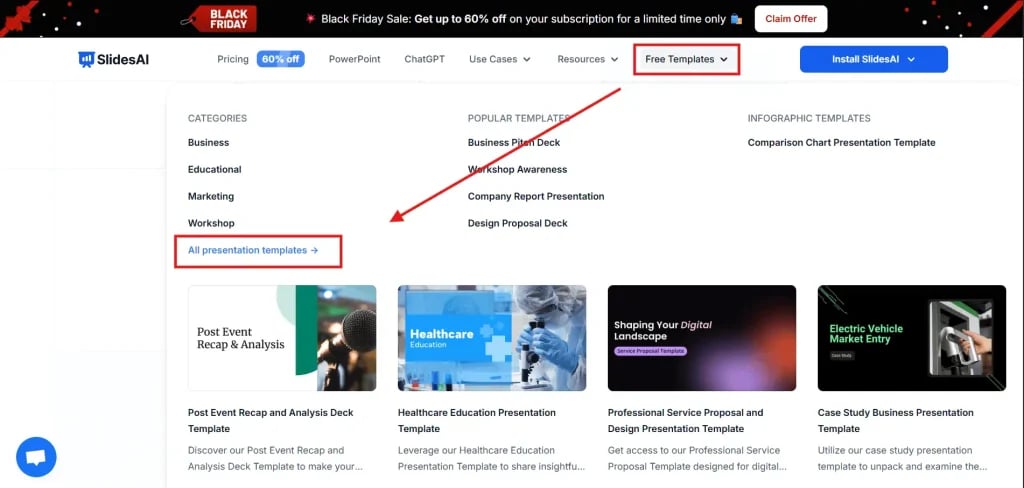
Step 3: Search for a Thesis Defense Template
Use the search bar and type “Thesis Defense Presentation Template”. When the template appears in the results, click on it to open the preview page and check if it matches your required style.
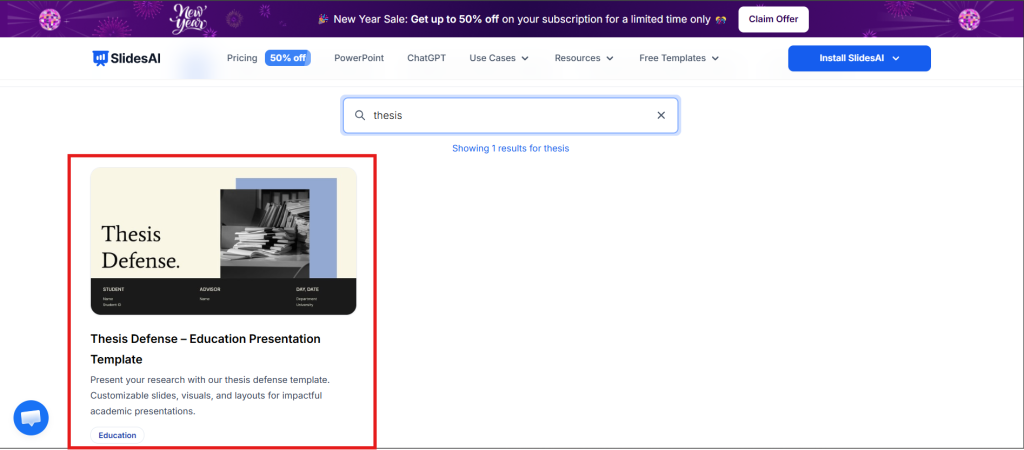
Step 4: Download the Template in Your Preferred Format
On the template page, look for the Download option on the right side. Click the dropdown and choose the format you want:
- PowerPoint (PPT/PPTX) for Microsoft PowerPoint users
- Google Slides for online editing and sharing
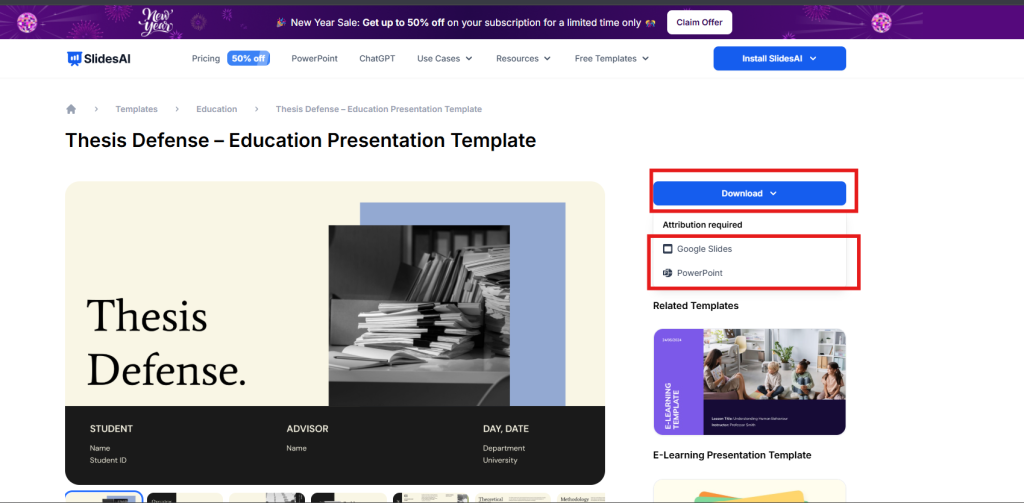
Step 5: Save the Template File
After selecting the format, the template will automatically download to your device. Make sure it’s saved in an easy-to-find folder like Downloads or Desktop.
Step 6: Open and Customize the Slides
Now open the downloaded template in PowerPoint or Google Slides. Replace the sample content with your thesis details, such as:
- Title and research topic
- Objectives and methodology
- Results and key findings
- Conclusion and future scope
Once you update the content and make final edits, your thesis defense presentation is ready to present.
Create Presentations Easily in Google Slides and PowerPoint
14M+Installs
 Install add-in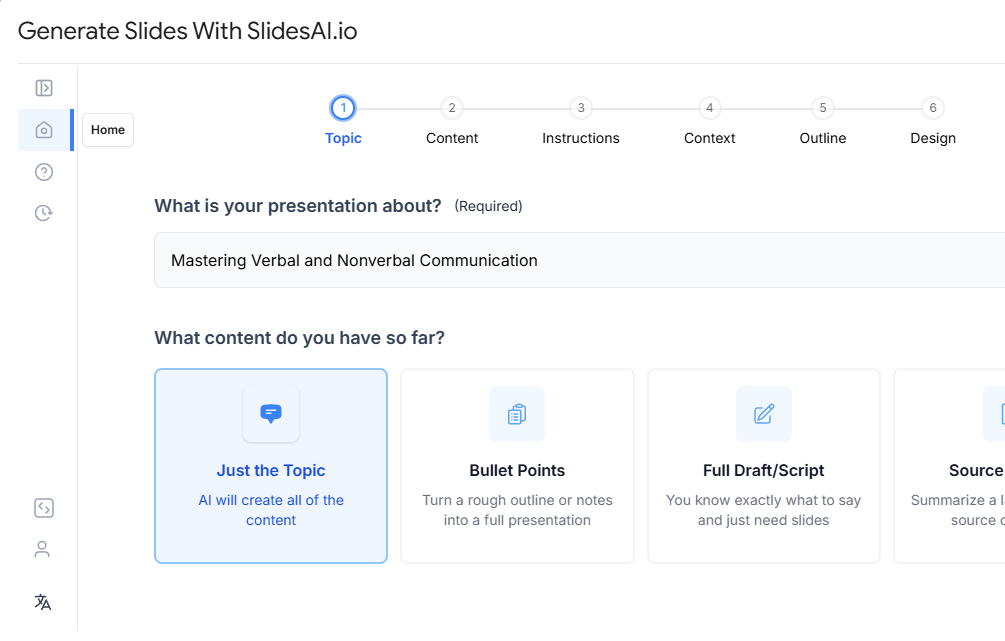
What Is the Importance of a Thesis Defense Presentation?
A thesis defense presentation validates your research and serves as the final stage where your work is reviewed by a committee. It helps you explain your research clearly and prove that your study meets academic standards.
- Academic Evaluation & Validation: It allows faculty to assess the quality, originality, and credibility of your research.
- Demonstration of Subject Mastery: It shows you understand your topic, methodology, and key concepts well enough to explain and defend them.
- Projection of Your Communication Skills: It tests how clearly you can present your research problem, process, and findings in a structured way.
- Engagement in Scholarly Discussion: It creates a space for meaningful discussion, where you justify your choices and respond to feedback.
- Highlighting Your Contribution to the Field: It helps you explain how your research adds value to your subject through new insights, results, or methods.
Also Read – Final Year Presentation Tips
How to Present Your Thesis Defense Presentation Confidently: 8 Practical Tips
Applying these tips will help you present your research clearly, stay composed during questioning, and leave a strong impression on your committee.
- Adjust Your Content to Your Audience: Consider the expertise of your committee and explain concepts accordingly. Avoid assuming prior knowledge while still maintaining academic depth.
- Emphasize What Truly Matters: Focus on your research question, methodology, and key findings rather than every detail. This helps the committee follow your main argument without distraction.
- Use Clear & Direct Language: Simple, precise wording makes complex ideas easier to understand. Remember that clarity matters more than sounding overly technical in your thesis defense presentation.
- Use Visuals to Support, Not Compete: Charts and diagrams should reinforce your explanation, not replace it. Avoid overcrowded visuals that require long explanations.
- Maintain a Smooth & Logical Flow: Ensure each slide transitions naturally to the next. A clear narrative structure helps your presentation feel organized and purposeful.
- Manage Stress Before & During the Defense: Preparation and practice reduce anxiety significantly. Slow breathing and pacing yourself during the presentation also help maintain focus.
- Anticipate & Prepare for Questions: Review your thesis thoroughly and note potential weaknesses or limitations. Preparing answers builds confidence during discussion.
- Respond Calmly When You Do Not Know an Answer: It is acceptable not to have every answer. Acknowledge the gap honestly and explain how you would approach solving it.
Conclusion
Creating a thesis defense presentation may feel challenging, but with the right structure, it becomes much more manageable. When your slides follow a clear flow from background and objectives to methodology, results, and conclusion, you make it easier for the committee to understand your research and evaluate your contribution.
To deliver a strong defense, focus on clarity over complexity, highlight only the most important insights, and practice your delivery so you feel confident during the Q&A. If you want to save time and build professional-looking slides faster, you can use the SlidesAI thesis defense presentation template to organize your content quickly and present your research with confidence.
Frequently Asked Questions (FAQs)
1. How long should a thesis defense presentation be?
A typical thesis defense presentation lasts 20 to 45 minutes, depending on institutional guidelines.
2. What should you avoid in a thesis defense?
Overcrowded slides are a big no-no during thesis defense presentations. Also, avoid reading directly from the slides and running over time.
3. How do you introduce a thesis defense presentation?
It’s best to begin your thesis defense presentation by clearly stating your research topic, problem, and relevance for maximum impact.
4. Should a literature review be included in the slides?
Yes, include a review in the slides, but keep it concise and focused on research gaps.
5. How detailed should the methodology section be?
The methodology section should include enough detail to justify your approach without overwhelming the audience.
6. Can animations be used in a thesis defense presentation?
Yes, you can use animations, but use them sparingly and with purpose, as you would want to grab the audience’s attention and not distract them.
7. What if you do not know the answer during the thesis presentation?
If you do not know the answer to the question addressed to you during the presentation, don’t panic. Remain calm, acknowledge the gap, and explain how you would approach finding the answer.
8. Can speaker notes be used during a thesis defense presentation?
Yes, but use your speaker notes as prompts rather than scripts.