According to industry data, 76% of employees spend up to three hours a day on data entry. That seems harmless enough, right? But actually, that translates to nearly 40% of an 8-hour shift dedicated to tasks that, to many workers, are uninteresting and uninspiring.
This is a problem for many organizations. First off, many repetitive tasks are important to some business functions, like creating slides, compiling reports, or visualizing data. So when employees feel bored or uninspired when doing them, it can quietly eat into their productivity and, ultimately, your profitability.
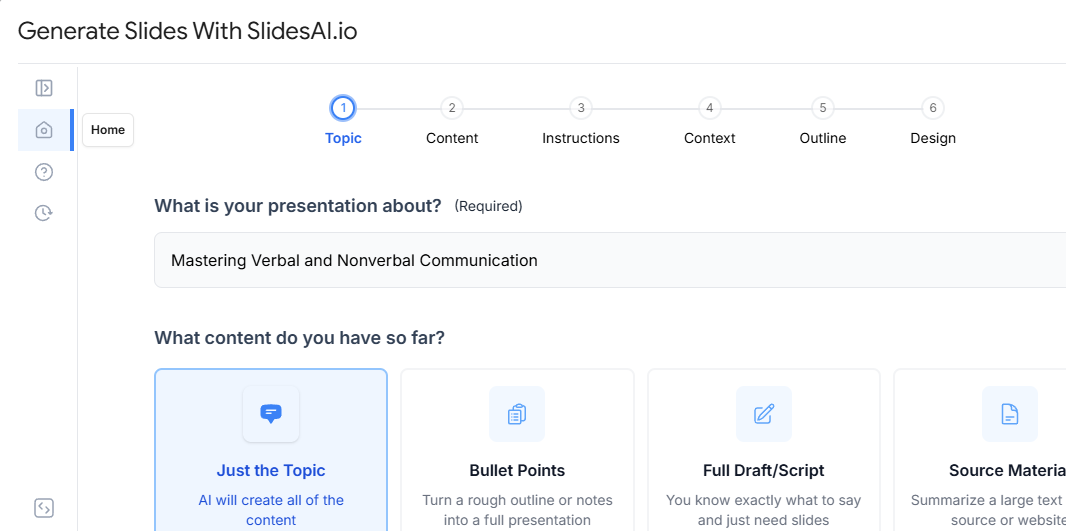
That’s where AI-powered productivity tools like Slides AI can help. Instead of starting from scratch, it helps your team create structured, presentation-ready slides in minutes. Vibe coding works in the same manner: you can easily get started with just an idea for an app or product and natural language prompts.
And when paired with technical AI expertise, such as deciding to hire AI developers, AI can transform routine tasks into custom, scalable processes that enable your employees to do more high-impact work and deliver market-worthy products.
The challenge is to integrate it successfully into your workflow so it keeps creating value. That’s what we talk about in this article.
The Cost of Manual, Repetitive Work
Manual, repetitive tasks do more than just bore your employees; they also take up a lot of time.
Practitioners, for example, say that manual slide creation can take anywhere from 6 hours to 3 weeks. For design, the process can end in as few as 6 hours. But if you include research and editing, it can go much longer.
The same holds true for compiling and formatting reports. Depending on the depth of information to cover, it can go from 3 days to up to a month. And proposals take about the same amount of time, give or take delays due to revisions or research.
What isn’t quantified in these processes, however, is that, ironically, repetitive tasks come with quite the mental load. Instead of making it easy for employees, they exhaust the brain, while also triggering stress hormones. And ultimately, they lead to poor performance, as well as lower quality of work.
This is why AI-powered tools like SlidesAI, alongside hiring AI developers for more complex use cases, are important. By automating repetitive tasks, you unlock a multiplier that not only boosts productivity but also enhances your team’s confidence, enables better decisions, and promotes more room for growth.
How AI Acts as a Productivity Multiplier
Using AI to improve internal processes can save you hundreds of hours of work. But more importantly, it can change how your organization treats and manages information.
SlidesAI, for instance, helps you easily turn raw inputs into structured presentations by:
1. Allowing employees to focus on more valuable work
By automating the process of creating slides, your employees don’t have to spend a lot of time assembling information and then interpreting it. And in turn, this creates opportunities to shift work up the value chain.
Instead of manually organizing content, employees can focus on other important tasks that may be closer to their core expertise.
2. Creating consistency
It’s one thing to ensure great design for your presentations, and it’s another to ensure consistency across decks.
With SlidesAI, you can:
- Maintain cohesion without manual tweaks
- Follow AI suggestions that complement your content
- Auto-generate bullet points from text to preserve narrative flow
- Integrate with Google Slides for real-time collaboration and edits
You can achieve and maintain consistency, even if different people work on different slides or presentations.
3. Accelerating deployment
Lastly, AI tools like SlidesAI shorten deployment time by automatically interpreting insights and transforming them into actionable outputs. This means your team can review, iterate, and respond faster.
And when propped up by additional AI expertise that comes from deciding to hire AI developers, you can integrate internal data sources or reporting pipelines into the process.
The results? Faster cycles, transparent communication, and higher-quality outputs.
Best Practices for AI Integration Across Teams
Here’s the caveat, though: adopting AI tools is only the first step. You still need to put in work to get real productivity gains from the integration.
Here are some best practices to remember.
1. Standardize design guidelines before you automate
Before you add tools like SlidesAI into your workflow, establish your design rules first. That includes your:
- Branding guidelines
- Shared slide templates,
- Content structures
This way, you won’t need to spend a lot of time tweaking AI-generated outputs. Having these standards in place also makes collaboration smoother when working with external contributors, including cases where teams are hiring Webflow developers to help maintain consistent layouts and structure.
2. Align your team on intent, not just tools
Also, train your team on the essentials so you can ensure consistently great outputs. Talk about your note structure processes, shared objectives, and review cycles to keep everyone on the same page.
3. Treat AI as a part of the workflow, not a shortcut
AI can accelerate execution, but human judgment should still be paramount.
Keep humans at the core of the integration by ensuring that final reviews are conducted solely by your employees. This will ensure accuracy and alignment with your business goals.
How to Make AI Work for Your Team
SlidesAI and other AI-powered tools can change the way your team works by automating internal processes and saving you hundreds of hours. And when you don’t need to contend with repetitive tasks, you can focus on the work that actually moves your business forward.
But remember, the real impact of these tools still depends on how well you use and manage them.
So don’t just stop at adopting AI tools; also make sure they complement the technical expertise of humans. Whether you hire AI developers or train your team to master them, you need to keep humans in the loop. This is how you sustain productivity gains throughout their product lifecycle.
Build Stunning Slides in Seconds with AI
- No design skills required
- 3 presentations/month free
- Don't need to learn a new software