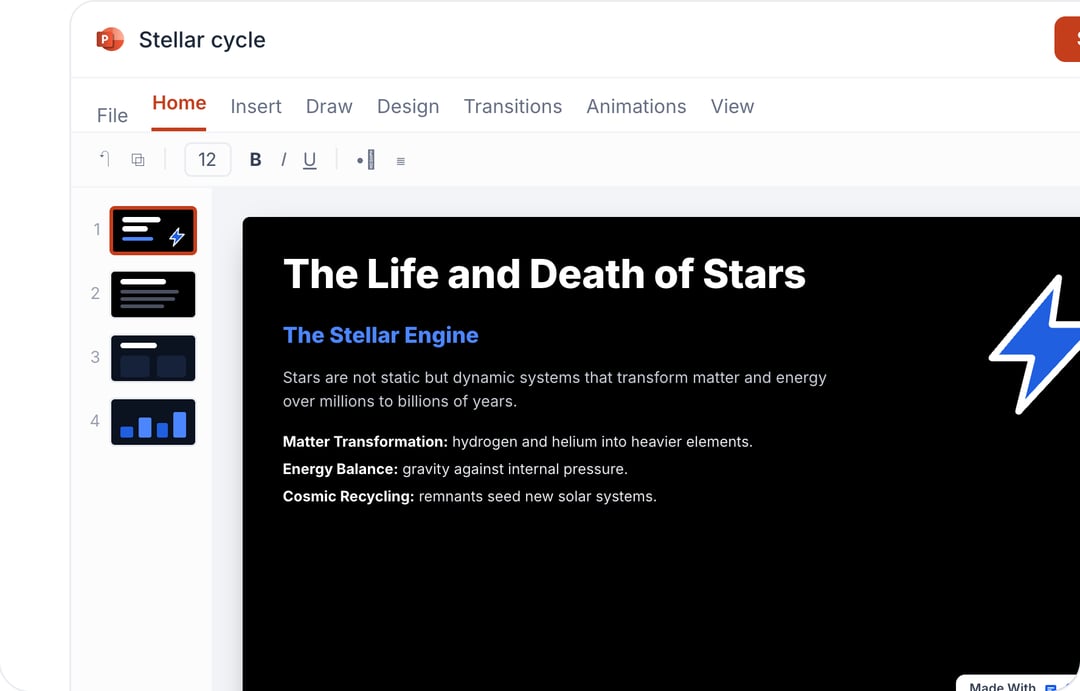

Picture this: The lights dim, the room hushes, and your presentation is in full swing. But as you near the end, there’s a sense of anticipation, not boredom. Your audience leans in, hungry for that final spark to ignite their minds. That’s the power of a captivating conclusion. The secret sauce that leaves your audience buzzing with your message long after the projector goes off.
So, how do you create this magical ending?
The key lies in crafting “the hook.”
In this guide, we’re not just going to help you learn how to end a PowerPoint presentation; we’re going to show you how to wrap it up with a bang!

Importance of Strong Endings in PowerPoint Presentations
A strong PowerPoint conclusion leaves a lasting impression, reinforces your key messages, and motivates your audience to take action even after the presentation ends.
- Memorability: The human memory is designed in such a manner that it remembers the beginnings and endings of experiences more vividly than what happens in between. Therefore, presentations should have a strong beginning and ending.
- Stresses on the main message: The concluding slides of a presentation serve as an opportunity to solidify your core messages to your audience. Such repetition of messages helps to reinforce the information in the minds of the audience.
- Leaves a positive impression: The concluding slides hold considerable weight as they impart the last impression. An ending that is well-crafted leaves the audience feeling informed, inspired, and motivated to take action.
- Call to action: In presentations designed to inspire the audience to take action, the conclusion becomes the opportune moment to persuade them into a specific course of action (CTA). Such actions may encompass tasks like enrolling in a service, advocating for a cause, or putting a solution into practice.
- Summarizing the key points: As you conclude your presentation, consider offering a concise recap of the primary topics you’ve covered. This ensures that your audience leaves with a firm understanding of the vital information you’ve presented during your talk.
Related Read – How Do You a Summary Slide on Google Slides?

Read Related – 7×7 Rule in PowerPoint Guide
8 Creative Ideas for Concluding Your PowerPoint Presentation
Scratching your head on how to end a PowerPoint presentation? Here are some hacks that can serve as a savior.
1. Strike an Engaging Call-to-Action (CTA)
As a business owner, your presentation’s ultimate goal is to inspire your audience to take action. Don’t just hope they’ll act; motivate them with powerful, clear instructions. Use definitive language in your calls-to-action, such as “Begin the journey” or “Join the fight,” to leave no room for ambiguity and guide your audience on what steps to take.
2. Avoid Ending with a Q&A
You’ve just spent a significant amount of time impressing your audience, and it’s essential to maintain control over the conclusion. Instead of a traditional Q&A, consider addressing questions throughout your presentation. This way, the queries will be relevant to the information being shared, ensuring that your audience stays engaged.
3. Close with a Compelling Story
Just as an engaging story at the beginning of your presentation captures attention, concluding with one can creatively summarise the insights you’ve shared. A well-chosen closing story can leave a lasting impact and reinforce your key message.
4. Reinforce Your Main Points
Concluding your presentation with a succinct summary offers your audience a structured recap of the essential points. Many adept presenters adhere to a straightforward summary approach for their closing slide, which can be summarized as follows: ‘Preview what you’re going to share, share it, and then recap what you’ve shared.
5. Share a Meaningful Quote
Ending with a meaningful quote helps reinforce the main idea of your presentation in a simple yet powerful way. A good quote can inspire your audience and tie everything together neatly. It gives them something thoughtful to remember and reflect on after the presentation. When chosen well, it can echo your message long after the final slide.
6. End with a Strong Visual
A strong visual can leave a lasting impression when words fall short. An image, graphic, or clean design helps summarize your message without overwhelming the audience. Visuals appeal emotionally and make your conclusion more memorable. This final visual cue often becomes what your audience remembers most.
7. Ask for Feedback
Asking for feedback makes your presentation feel more interactive and engaging. It encourages questions, discussion, and participation from your audience. Feedback also helps you understand what resonated most and where you can improve. Ending this way shows confidence and openness to conversation.
8. Presentation Thank You Slide
If you’re looking for a graceful way to signal the end of your presentation and invite applause, expressing gratitude to your audience can be effective. Including a closing slide or a thank-you message can provide a clear cue that your presentation has concluded, making it easier for your audience to respond positively.
Common Mistakes to Avoid When Ending a PowerPoint Presentation

Before delving into the formula for a successful presentation, it’s essential to address some common public speaking blunders that can undermine your presentation’s effectiveness. They are as discussed below:
- Weak starts and closures: The beginning and ending of a presentation are paramount. Consider your presentation as a meticulously crafted meal for your guests. Starting and ending your presentation strongly captures your audience’s attention swiftly and leaves a positive, lasting impression. These skills are pivotal and cannot be overstated.
- Insufficient Preparation: Effective presenters often make it seem effortless, but it’s crucial to underscore that thoughtful preparation is at the core of successful public speaking. Adequate preparation not only boosts your confidence but also ensures you convey the right message to your specific audience.
- Being overly rigid: Beyond mastering your content, it’s essential to be comfortable in your own skin. Some speakers remain stationary, barely moving, and this can inadvertently disengage their audience. While circumstances may sometimes require you to stand behind a podium, even then, employing natural gestures can humanize your presentation and maintain audience interest. When possible, use the stage to enhance your connection with the audience.
- Overloading your conclusion: Overloading slides with text can distract your audience and shift attention away from you as the speaker. Slides are meant to support your message, not repeat everything you say. Keeping them simple with key points or visuals helps your audience stay focused and engaged.
- Lack of a clear takeaway: If your audience cannot easily recall the main point after you finish, your message may not be clear enough. A strong conclusion reinforces one key takeaway, ensuring your presentation leaves a meaningful impact.
- Monotonous delivery: Speaking in the same tone and pace throughout can quickly lose your audience’s attention. Varying your voice, pauses, and emphasis makes your presentation more dynamic and helps highlight important ideas.
- Ignoring audience engagement: Failing to acknowledge your audience’s reactions or questions can make the presentation feel one-sided. Engaging with your listeners through questions, pauses, or brief interactions keeps them involved from start to finish.
- Poor time management: Spending too much time on early slides often leads to a rushed or weak conclusion. Managing your time well ensures your presentation ends calmly, confidently, and with impact.
- Neglecting eye contact: One of the most prominent body language mistakes in public speaking is avoiding eye contact. When speakers continuously stare at their notes or presentation slides, it can make the audience feel overlooked. Establishing eye contact creates a genuine connection and keeps listeners engaged.
Instead of building slides manually, let SlidesAI’s AI PowerPoint maker create a well-structured presentation from your topic.
Conclusion:
While delivering a business presentation or an inspirational speech, mastering how to end a PowerPoint slide show is crucial. How you conclude your talk can leave a lasting impact, whether it involves summarising your main points or posing a thought-provoking question.
SlidesAI has proved to be a game-changer in the field of making presentations.
This AI presentation maker can significantly elevate the quality of presentations by effortlessly transforming your thoughts into impactful slides with its text-to-slide feature. By generating visually striking, easy-to-understand, and seamlessly flowing presentations, you can effectively streamline your ideas and engage your audience at a whole new level.
Take Your PowerPoint From Basic to Professional With SlidesAI
- Improve your slide content with AI
- Create polished layouts faster
- Work directly inside PowerPoint