

Starting a presentation can feel a bit awkward, especially when your audience is quiet or unsure of what to expect. That’s where ice breakers come in. These simple activities help you connect with your listeners, ease any tension in the room, and set a friendly tone for what’s coming next.
Whether you’re teaching students, speaking to colleagues, or presenting at a workshop, using a short ice breaker can grab attention and make everyone feel more comfortable. It helps people shift from passive listening to active engagement right from the start. In this list, you’ll find easy ideas you can try in your next session to make those first few minutes count.
What Is a Presentation Icebreaker?
A presentation icebreaker is a short activity or question you use at the beginning of a session to get people talking, smiling, or thinking. It helps you ease into the presentation and makes your audience feel more comfortable and ready to engage. Icebreakers can be as simple as a quick game, a funny question, or a light activity that gets everyone involved from the start.
What are the Benefits of Icebreakers for a Presentation?
Here are the benefits of using Icebreakers in a presentation:
1. Breaks Down the Awkwardness
Let’s face it, the start of any presentation can feel stiff. People are unsure of what to expect, and there’s often a bit of silence in the room. A good icebreaker breaks that tension. It gives everyone something easy to do or respond to, which clears the air and sets a more relaxed tone right away.
2. Helps People Relax and Have Fun
When people laugh, move around, or just speak up in a light activity, they begin to relax. That feeling of fun doesn’t just help them enjoy the session more, it also makes them more open to learning and participating. Icebreakers lower stress and help your audience shift into a better headspace for your topic.
3. Helps You Connect With Your Audience
Starting with an icebreaker gives you a chance to read the room and build a quick bond. When your audience sees that you’re making an effort to include them, they are more likely to pay attention and respond to you throughout the presentation. It makes things feel less like a lecture and more like a shared experience.
4. Creates a Positive Atmosphere
A room that starts off with a bit of laughter or group activity feels different from one that starts in silence. Icebreakers bring in positive energy, encourage openness, and make the whole environment feel lighter. That kind of atmosphere helps people stay focused and engaged for longer.
Types of Ice Breakers (with Use Cases)
Not every group is the same, and that’s why different types of icebreakers work better in different situations. Here’s a breakdown of the most common types and how you can use them during presentations.
1. Interactive Games
These are great when you have some time and want to get people moving or working together. Activities like Human Bingo, Snowball Fight, or a quick Scavenger Hunt work best with medium to large groups. They get people talking, laughing, and working in teams. You can use these during school presentations, workshops, or any group session where breaking the ice quickly matters.
Use case: Ideal for group sessions, first-day introductions, or classroom warm-ups when you want people to mix and talk to each other.
2. Question-Based and Humorous Starters
These icebreakers involve fun or thoughtful questions that get people thinking or laughing. Options include Would You Rather, Fun Facts, or the 4C’s (Character, Colour, Cuisine, Country). These are quick and easy, and they work well when you want to build comfort without needing props or tech.
Use case: Perfect for small to mid-sized groups, informal settings, or when you’re working with students or adults who need a gentle nudge to speak up.
3. Tech-Enabled Icebreakers
These are best when you want quick responses and visible engagement from everyone. Tools like live polls, quizzes, or word clouds allow students or participants to respond using their phones or devices. You get real-time feedback and can show the results on a screen. These work especially well in presentations with large audiences.
Use case: Great for digital classrooms, teacher training sessions, webinars, or conferences where you want to keep things lively without needing physical movement.
4. 5-Minute Quick Starters
If you are short on time, these quick warm-ups do the job. Try a round of trivia, a one-word check-in, or a simple question like “What’s one thing on your mind today?” These quick starters are short, friendly, and keep the mood light while still getting people involved.
Use case: Best for morning sessions, back-to-back meetings, or when you need a fast icebreaker to reset the room before jumping into the main content.
5. Virtual or Hybrid-Friendly Icebreakers
When your group is online or split between in-person and remote, you need icebreakers that work for both. Activities like Show-and-Tell, changing virtual backgrounds, or quick visual games keep everyone in the loop. These bring personality into virtual spaces and make the session feel more human.
Use case: Perfect for online classes, remote meetings, or hybrid training sessions where you want every voice to be seen and heard.
Presentation Ice-Breakers by Audience Size
If you’re wondering how to warm up your audience before jumping into your content, here’s a list of practical ice-breakers, grouped by audience size. These are easy to run and work well in both in-person and virtual settings.
Ice-Breakers for One-on-One Presentations
1. Expectation Check-In
Start the session by asking, “What’s one thing you hope to get out of this session?”
This immediately turns the conversation into a two-way interaction. It helps you understand what matters most to the other person and gives you a chance to adapt your flow accordingly.
2. Personal Story Share
Begin with a short story from your own experience that ties into the session topic. After that, invite them to share something of their own.
This softens the tone, builds trust, and makes the setting more conversational. It helps both of you feel more comfortable and invested.
3. Familiarity Gauge
Ask, “On a scale from 1 to 10, how familiar are you with this topic? Why did you pick that number?”
This gives you a quick read on their prior knowledge and lets you adjust your depth and speed as you go.
4. One-Word Mood
Before diving into the content, ask them to share one word that describes how they feel about the session. Whether they say curious, nervous, or excited, it gives you a small window into their mindset. You can refer back to their response during your talk to make the conversation more relevant and personal.
5. Pet or Interest Prompt
Ask something light like, “Do you have a hobby or interest outside work that surprises people?” This adds warmth, brings out their personality, and builds rapport. You may not be talking about the topic yet, but you’re already building a better human connection.
6. Topic-Relevance Question
Try asking, “What’s one thing you hope I won’t say today?” It’s a fun, unexpected prompt that opens the door to honest feedback. You might uncover hidden concerns or things they’ve heard too often. It helps you avoid pitfalls and keeps the conversation fresh.
Ice-Breakers for Small Group Presentations (2–10 People)
7. Introductions with a Fun Fact
Go around the room and ask each person to share their name, role, and one unusual or fun fact about themselves.
This makes it easier to remember names and keeps the tone friendly. It also gets everyone speaking early, which helps build confidence for the rest of the session.
8. Story Chain Building
Start a sentence related to your topic. Then go around the group, asking each person to add a sentence to continue the story. For example, you might begin with, “Yesterday, I opened my email and saw…” Each addition builds on the last. This warms up the group’s creativity and keeps the tone playful while tying into your content.
9. Silent Alphabet Line-Up
Challenge the group to line up alphabetically by their first names without talking. You can do this in-person or in breakout rooms. It gets people moving, collaborating, and having a laugh before the session really begins. It also breaks the default “sit-and-listen” mode.
10. Object Pick-Up Share
Invite each person to grab an object nearby that represents how they feel about the topic. Then have them briefly explain why.
This physical interaction makes the ice-breaker more memorable and personal. It’s especially engaging in remote setups where everyone is in a different space.
11. Would You Rather – Small Group Version
Pose a question like, “Would you rather launch this project solo in two weeks, or with a team in one month?”
Let the group briefly discuss. It warms up decision-making muscles and sparks thoughtful conversation tied to the session topic.
Ice-Breakers for Medium Group Presentations (11–30 People)
12. Live Word-Cloud Question
Ask, “In one word, how would you describe your attitude toward today’s topic?”
Use tools like Mentimeter or Slido to collect answers and show them live as a word cloud. This gets everyone participating and gives you a quick snapshot of the group’s mindset.
13. Human Bingo Mingle
Create bingo cards with prompts like “Has given a presentation this year” or “Speaks two languages.” Ask participants to find others who match the statements and fill in their cards.
This encourages mingling and breaks the ice across the room, especially if not everyone knows each other well.
14. Would You Rather Poll
Pose a quirky question tied to your session like, “Would you rather present with no slides, or with 100 slides and no prep?”
Collect answers via a quick poll or show of hands. It starts conversations and adds humour before diving into your content.
15. Quick Pair-Share
Pair everyone up and give them one minute each to share their name, role, and a challenge they face related to the topic. Then bring it back to the group and highlight a few insights.
This helps everyone feel heard, surfaces relevant issues early, and builds comfort within the group.
16. Show-of-Hands Knowledge Check
Ask, “How many of you have used [tool or strategy] before?” Follow up with, “What’s one thing you wish you knew when you started?”
This gives you a clear idea of the group’s experience level and provides a smooth lead-in to your presentation.
17. Speed Networking Warm-Up
Have participants rotate through short 2-minute pairings where they share their name, one expectation, and one concern.
This works well when the group is unfamiliar with each other. It breaks the silence, sets the tone, and helps them feel more connected from the start.
Ice-Breakers for Large Groups (31+ People)
18. Mass Word-Cloud or Location Map
Ask everyone to submit one word describing their mood or share their location. Use a word cloud or interactive map to display responses.
This gives large rooms a shared visual and helps people feel like part of a connected group even if they don’t know each other.
19. Toss-the-Question or Fun Item
In a physical setting, use a soft ball with prompts written on it. Toss it around the room and let whoever catches it answer a question. For virtual settings, use a random generator or digital spinner to pick questions and participants.
It’s playful, brings some laughter, and lightens the mood early in a big session.
20. Move-to-Side Game
Ask the audience to physically move to one side of the room based on their preference. For example, “If you prefer working alone, go to the left. If you prefer teams, move to the right.” This helps them learn about each other and reflect on their own style. It works well to create an immediate sense of participation in big groups.
21. Live Mini-Quiz
Start with a quick poll containing 2 or 3 multiple-choice questions on your topic. Display results live.
This gives you a quick read on what people already know and helps build anticipation for what’s coming next.
22. Energiser Stretch or Mood Shout
Ask everyone to stand, stretch, and shout one word that matches how they’re feeling. Then have them sit again.
Perfect for early mornings or post-lunch sessions. It lifts the mood and resets attention before you begin.
23. Hybrid Breakout Warm-Up
If you’re working with a mix of virtual and in-person attendees, send everyone into short paired breakout rooms. Ask them to share their name, one expectation, and one concern. After two minutes, bring everyone back and invite a few pairs to share with the full group. This helps everyone feel involved and connected despite the format.
Presentation Ice-Breakers by Tone & Context
Here’s a closer look at some of the best presentation icebreakers divided based on the tone and context:
Ice-Breakers for Business & Sales Presentations
1. Metric Mood Check
Start your presentation with a slide that reads, “Which business metric best describes how you feel about today’s topic?” Give options like Profit, Break-Even, or Under Pressure. Ask participants to choose one and then invite one or two people to briefly explain why. This keeps it relevant to the business theme, gives you insight into how they’re feeling, and naturally ties into performance metrics or KPIs you might be discussing.
2. Success Story Spotlight
Begin by asking for two or three volunteers to share a quick 30-second win or recent achievement that relates to your topic. You can display a timer or prompt on the slide to guide responses. This builds credibility, brings in real experiences, and sets a positive, collaborative tone from the start.
3. Scenario Choice Poll
Present a slide with a “Would You Rather” style dilemma. For example, “Would you take a new product to market in 6 months with high risk or in 12 months with low risk?” Run a live poll and show the results instantly. Then spend a minute debriefing why that choice matters. This sharpens decision-making thinking and primes the room for strategic discussions.
4. Give Kudos Round
Display a slide with the prompt: “Name a colleague or team that recently did something impressive.” Ask participants to share their answers either verbally or in the chat. You can read a few out loud to keep it moving. This builds goodwill, boosts morale, and creates a culture of recognition before you dive into your content.
5. Problem-Solution Quick Brainstorm
Show a one-line problem on a slide, like “Sales dropped 10% in Q2—what’s one fix?” Break your audience into pairs or small groups and give them two minutes to come up with a solution. Then ask one group to share. This kind of activity sparks engagement early and signals that your session will be active, not passive.
6. Ask-the-Expert Prompt
Ask the audience, “What one business question do you hope we’ll answer today?” Let them type it into the chat or drop responses in a shared doc. Read out a few and acknowledge them. This gives you a read on expectations, sets the tone for value delivery, and makes participants feel heard from the beginning.
Ice-Breaker Ideas for Training Sessions & Workshops
7. Two Truths and a Lie – Workshop Edition
Ask each participant to come up with two truths and one lie about their experience with the session’s topic. They say them aloud, and others try to guess which is the lie. You can display names on a slide as you go. This gets everyone thinking, builds community, and gives you a sense of their background with the topic.
8. Build-a-Concept Drawing
Hand out paper, use whiteboards, or use a shared slide. Ask small groups to draw what they currently understand about the topic. After 5 minutes, let each group present their drawing. This taps into prior knowledge and helps participants visualise their thinking, which you can build on as the session progresses.
9. Role-Swap Prompt
Pose the question: “If you were leading this session for five minutes, what’s the first thing you’d talk about?” Invite 2–3 people to share their thoughts. You can display a blank slide or fun image while they speak. This puts the focus on what matters most to your audience and can help you pivot or prioritise the right subtopics.
10. Live Poll or Word-Cloud on Expectations
Ask, “What’s one outcome you want from this workshop?” Collect answers using a poll tool or display them as a live word cloud. This makes the session more participant-driven and helps you frame your content with their goals in mind.
11. Puzzle or Team Challenge
Give groups a small puzzle or logic task—physical if in person or digital if virtual. Set a 2–3 minute timer on screen and let them work together. Afterward, ask, “What did you learn about how your team worked?” This is a great way to transition into content around collaboration, communication, or problem-solving.
12. Pop-Quiz Start
Open your session with 2–3 multiple choice or true/false questions about the topic. Let participants answer using a live quiz tool, and then show the correct answers. Use the results to highlight where knowledge gaps exist. This creates energy and gives you a base to build your lesson from.
Virtual Presentation Ice-Breakers
13. Virtual Background Mood
Ask participants to change their virtual background to something that represents how they feel about the topic. For example, someone might choose a beach if they feel relaxed, or a busy office if they feel stressed. Invite 2–3 people to explain their choice. This adds a visual layer to remote sessions and encourages emotional check-in without much effort.
14. Show and Tell Object on Camera
Prompt your audience with, “Find something nearby that represents a challenge you’re facing today.” Give them 30 seconds, then ask a few people to share. This turns passive listeners into active participants and creates space for honesty and personal insight.
15. Selfie or Guess-Whose-Photo
Ask participants before the session to send in a fun photo of their pet, desk, or childhood. During the session, show one on a slide and have the group guess whose it is. This builds connection, lightens the mood, and gets remote teams to feel more human and less like talking icons on screen.
16. Virtual Scavenger Hunt
Start with, “Find something in your room that represents creativity,” or tailor the prompt to your topic. Give them 30 seconds and then show what they found on camera. It’s a quick break from screen fatigue and gets people moving, even in virtual sessions.
17. Breakout Room Quick Share
Send participants into pairs or trios for a 2-minute breakout session. Ask them to share their name, one expectation, and one challenge related to the topic. Bring everyone back and ask a few pairs to share highlights. This builds instant trust and makes even large virtual sessions feel connected.
Fun or Playful Presentation Ice-Breakers
18. What’s Your Movie Title?
Pose this creative question: “If today’s topic was a movie, what would its title be?” Display it on a fun slide with space to write responses or ask a few people to say theirs out loud. This adds humour, creativity, and helps participants connect emotionally to the topic.
19. Bad-Slide Roast
Show one hilariously bad slide on screen, maybe one with ten fonts, unreadable text, or chaotic colours. Ask, “What’s the first thing you’d fix?” This not only gets laughs but sets the stage for talking about presentation best practices or design tips.
20. Would You Rather – Fun Edition
Ask a quirky question related to your topic, like “Would you rather give a 5-minute talk with 50 slides or a 30-minute talk with no slides?” Run a live poll or ask for a show of hands. This brings up different preferences and helps open up discussion around presentation styles or delivery techniques.
21. GIF Mood Barometer
Ask participants to post a GIF in the chat that reflects how they feel about the topic. Display a few on screen if possible. Comment on the funniest or most surprising ones. It is playful and helps you get a quick read on the room’s mood.
22. The No-Smiles Challenge
Start your session with, “Let’s try not to smile for the next 30 seconds.” Most people will laugh or break instantly. It’s silly but works as a tension-breaker and immediately shifts the tone to something more relaxed and open.
23. Human Rock-Paper-Scissors Tournament
Organise a fast-paced rock-paper-scissors game among participants. Pair them up, have winners advance in a bracket format, and celebrate the champion. This works best in person but can be modified for camera use in small virtual groups. It’s energetic, interactive, and sets a high-energy tone.
24. Meet My Pet or Show Your Desk
Invite people to introduce their pet or show something on their desk and share a quick fact. This works well at the start or during a short break. It adds personality to your session and reminds everyone that they are engaging with real people.
Ice-Breakers by Audience Familiarity
Ice-Breakers for Audiences That Don’t Know Each Other Well
1. Name + Interesting Fact Share
Start your session by inviting each person to say their name followed by one unique or surprising fact about themselves. You can prompt them with examples on your slide like “a hobby,” “a place they’ve visited,” or “a hidden talent.” This simple activity helps break the initial silence and gives everyone something memorable to connect with. It also helps you and others remember names more easily throughout the session.
2. Motivation Snapshot
Display a slide with the question: “What brought you to this session today?” Ask each participant to respond with a short sentence. You can collect answers aloud, via chat, or using a polling tool. This activity helps everyone reflect on their personal goals, and it gives you a sense of what the room expects. You can even reference these motivations later in your talk to build stronger engagement.
3. Introduce Your Neighbour
Ask participants to pair up. Give them one minute each to interview their partner with a few guiding questions displayed on your slide. After the short exchange, each person introduces their partner to the group. This approach takes the pressure off talking about yourself and builds empathy among attendees. It works well in both in-person and breakout room formats, and helps everyone feel heard right from the start.
4. Find Someone Who… Bingo
Prepare bingo cards with unique traits or experiences, like “Has worked remotely,” “Can speak more than three languages,” or “Has led a project team.” Hand out physical cards or display a digital version if you’re online. Ask participants to mingle and find someone who matches each square. Once they do, they write the name in that box. This game gets people moving, talking, and making fast connections with others in the room.
Ice-Breakers for Audiences That Already Know Each Other
5. Highlight & Challenge Share
Ask each participant to think back on the time since you last met. On a slide, display the prompt: “What’s one highlight and one challenge you’ve experienced since our last session?” Go around the room and let each person briefly share. This creates space for reflection, encourages honesty, and keeps your sessions grounded in shared progress and lived experiences.
6. Team-Movie Sequel Prompt
Add a playful question to your opening slide: “If our team, project, or topic were a sequel movie, what would the subtitle be—and why?” Let people share their answers one by one or in groups. This adds humour, sparks creativity, and brings up inside jokes or shared goals. It works especially well when your group has been working on something together and needs a fun way to reflect on it.
7. Shared Memory Recall
Display the question on a slide: “What is one standout memory from our last session or project together?” Ask a few volunteers to share. You can even add photos or past slides as visual cues. This activity works as a warm-up for reflection and helps strengthen group identity by bringing back moments of learning, success, or even shared struggles.
8. Suggestion Box Rapid
Give each person a sticky note if you’re in person, or a link to a collaborative tool like Jamboard, Padlet, or a Google Form if you’re online. Pose the question: “What’s one thing I or we can do differently in this session to make it better?” Let them respond quickly and anonymously. Collect all suggestions and display a few on a slide. It makes people feel included, invites co-creation, and opens up a collaborative tone for your session.
Need a presentation that keeps your audience engaged from the first slide? Explore our presentation templates and get started faster.
Step-by-Step Guide to Run a Smooth Icebreaker in Your Presentation
Step 1: Set the Context
Start by clearly telling your audience what the icebreaker is for. Let them know how much time it will take, how they’ll be participating, and what you’re hoping to get out of it. This helps reduce hesitation and sets a relaxed tone. For example, you might say, “We’ll spend the next five minutes getting to know each other a bit. You don’t need to prepare anything. Just be yourself.”
Step 2: Facilitate Participation
Make it easy for everyone to join in. Use tools like polls, chat boxes, breakout rooms, or even just hand-raising. If it’s in person, give simple instructions or pair people up. If some participants seem shy, offer the option to respond anonymously or in writing. Always model the first answer to break the silence and lower the pressure.
Step 3: Publish Outcomes
After the activity, show what came out of it. You can display a word cloud, read a few responses out loud, or take a screenshot of the poll results. This makes the activity feel real and valuable instead of just a warm-up. If the answers were funny or surprising, don’t be afraid to laugh along. It builds comfort and keeps things human.
Step 4: Bridge to Your Topic
Use the responses to transition into your main presentation. Link what came up during the icebreaker to your agenda. For example, “Since many of you mentioned challenges with time management, that ties in well with today’s session on planning tools.” This makes the icebreaker feel connected and intentional, not random.
Closing Thoughts
A strong icebreaker can completely change how your presentation begins and how your audience responds. When you start with something simple and welcoming, people relax, open up, and engage more easily with your message. No matter the group size or setting, a well-chosen icebreaker helps you build connection early and sets the right tone for everything that follows.
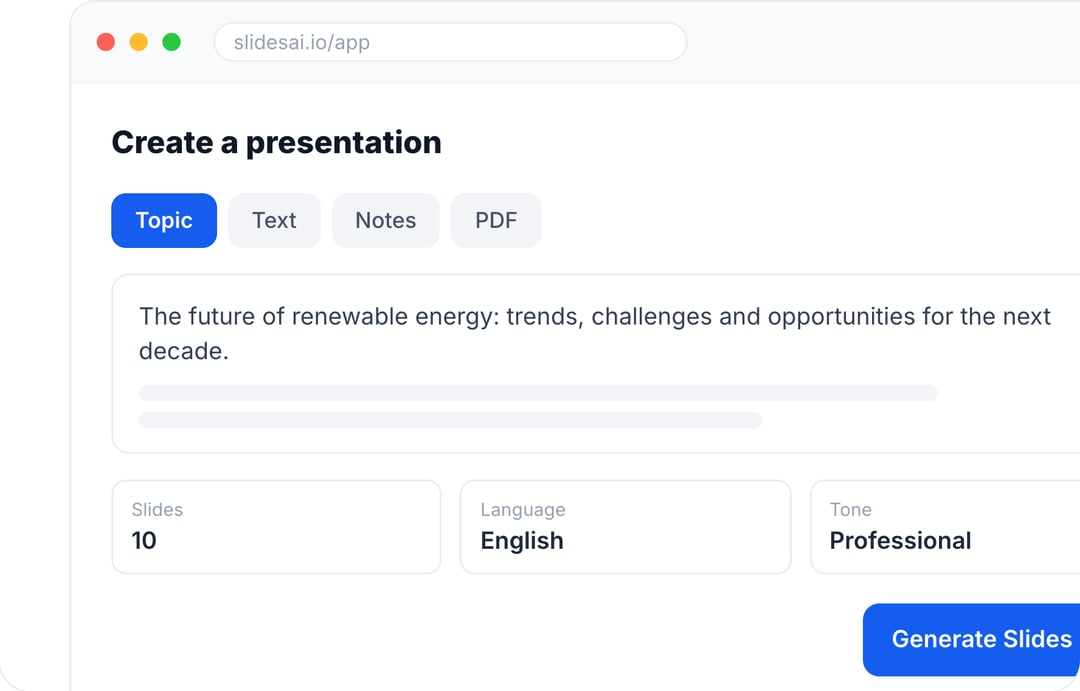
Create Presentations in Minutes With SlidesAI
- Start with a topic, text, notes, or PDF
- Generate slides in minutes
- Customize your presentation with ease
Frequently Asked Questions Around Icebreakers for Presentation
1. What is a presentation icebreaker?
A presentation icebreaker is a short activity, question, or prompt used at the beginning of a session to help your audience feel more comfortable. It gets people talking or thinking right away and makes it easier for them to engage with your presentation.
2. Why should I use an icebreaker in my presentation?
Using an icebreaker helps reduce initial awkwardness and sets a friendly tone. It helps your audience relax, pay attention, and feel more involved instead of just listening passively from the start.
3. How do I choose the right icebreaker for my audience?
Think about your audience size, how well they know each other, and the setting. For small or familiar groups, simple questions or short discussions work well. For larger or mixed groups, quick polls or light activities are easier to manage and keep everyone included.